










































Nigeria Continues to Intensify Efforts against Polio
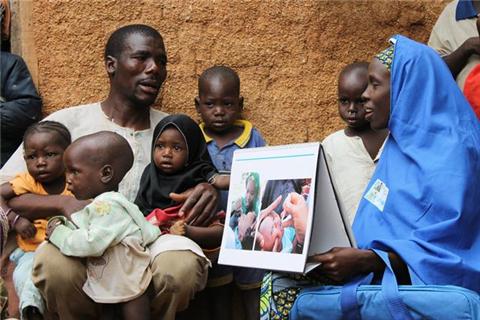
"[I]nterpersonal communication skills are needed to break resistance to immunization which has largely been caused by ignorance, rumours, religious beliefs, illiteracy and other social and political factors."
As detailed in this news story, along with other high-risk states, Kano, Nigeria, embarked on a massive door-to-door polio immunisation campaign, July 7-10 2012. Some pockets of resistance to polio immunisation in this polio-endemic country still persist in some villages. In Marke village, one man quoted here initially would not allow the vaccination team to administer the oral polio vaccine to his children. "I was aware of this campaign, but don't really know its importance. By the grace of God, my children are all healthy, so why do you want to administer medicines to them?" he asked. By using a pictorial flipbook, a female volunteer community mobiliser trained as part of a United Nations Children's Fund (UNICEF) initiative was able to convince him to immunise his children after explaining the importance of polio immunisation, as well as other key household health practices. This network of community mobilisers is now fully operational in Kano, Kebbi and Sokoto States, and recently, has been extended to the states of Katsina, Jigawa, Zamfara, Yobe and Borno, all in northern Nigeria.
Multiple advocacy and social mobilisation efforts are underway to ensure that not a single child is missed during polio immunisation campaigns in Nigeria. Earlier in July, the government urged traditional leaders in the Northern Traditional Leaders' Committee to mobilise and encourage their respective communities to get children immunised against polio. In the May immunisation campaign, more than 50% of refusal cases were resolved by traditional leaders in this local government.
Polio News [PDF], July 2012.
- Log in to post comments