











































Maternal Immunization Decision-Making Among Pregnant and Lactating People in Kenya: A Qualitative Exploration of Peer Influences on Vaccine Decision-Making for a Future RSV Vaccine
Johns Hopkins Bloomberg School of Public Health (Singh, Fesshaye, Lee, Karron); Jhpiego Kenya (Njogu)
"Vaccination decisions are shaped by societal, cultural, and personal factors, and understanding how these contextual factors shape decision-making is critical to inform strategies to promote immunization, especially during pregnancy..."
Cultural norms and gender roles are important factors to consider while exploring interpersonal, or peer, influence on vaccine-specific and broad health decision-making. Many societies in Sub-Saharan Africa, such as Kenya, are patriarchal societies, with male family members having influence on their spouse's access and utilisation of health care. With the anticipated availability of a new maternal respiratory syncytial virus (RSV) vaccine as early as 2024, this study aimed to understand the dynamics of vaccine decision making, including key influences on maternal vaccine decision-making processes among pregnant and lactating people (PLP) and community members in Kenya. The hope was that exploring which influences to focus on during demand generation can help with acceptance and uptake at the onset of vaccination.
This qualitative study conducted in-depth interviews with six pregnant people, 18 lactating people, and 10 community members (family members of PLP, community health volunteers, and community leaders) in one rural and one urban county in Kenya. Data were collected in July-September 2022 and analysed using a grounded theory approach.
PLP were asked which information sources they consulted to make decisions about maternal immunisation, with the top two most frequently mentioned sources being healthcare providers (HCPs) and other community members, including family members.
The majority of interviewed PLP believed that decision-making during pregnancy should be left to themselves due to autonomy and their role as the primary caregiver. Two-thirds (4/6) of pregnant people interviewed believed they would be the primary decision makers for a future maternal RSV vaccine. One stated reason was due to the belief that the mother knows what is best not only for herself, but also for her infants. Community members, including male partners, also identified pregnant people as the key decision-maker.
While some PLP said they deferred to male partners to make vaccine decisions, more felt that men were not as informed on maternal and child issues as themselves or other female peers and relatives. Some participants valued the input of other women in the maternal vaccine decision-making process over that of their male partners, leading the researchers to suggest that, "Given the complex gender dynamics involved in decision-making during pregnancy within individual communities and households, demand generation and community sensitization efforts for future maternal vaccines should aim to target not only pregnant people and their partners, but also female peers and family members."
HCPs also emerged as important influences for PLP during decision-making. Sub-themes that emerged included the role of HCPs as advisors in the decision-making process, trust in and deference to the opinion of HCPs due to the perception that they are best informed about vaccines due to their education and training, and beliefs that HCPs could mandate vaccines.
In the lead-up to the introduction of the maternal RSV vaccine in Kenya, the researchers conclude that:
- "It is important to recognize the autonomy of pregnant people within the context of the decision-making process, while ensuring that male partners perceive that they are included in the process. Ensuring that male partners are part of community sensitization efforts for new vaccines is also key to not alienate those pregnant people who would prefer - or are required - to consult with or obtain permission from their male partners prior to receiving a vaccine during pregnancy."
- "Additionally, while pregnant people perceive themselves to be autonomous in decision-making even during pregnancy, they still seek to obtain information and guidance from their healthcare providers and female peers. Therefore, demand generation and community sensitization efforts for any maternal vaccines should involve not just the pregnant person and their healthcare provider, but also their family members, partners, and peers."
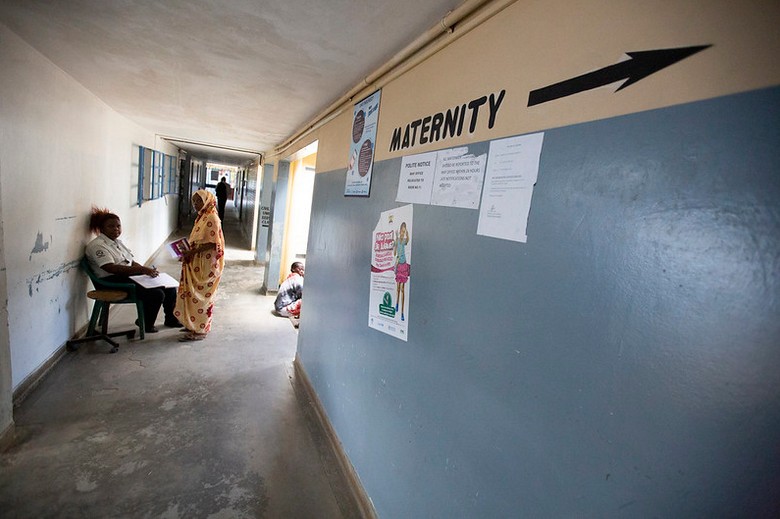
Maternal and Child Health Journal. https://doi.org/10.1007/s10995-024-03982-8. Image caption/credit: Two women talk next to the access to the maternity ward at the Port Reitz Hospital in Mombasa, Kenya. Photo: Arete / Albert Gonzalez Farran for Health Policy Plus (CC BY-NC 2.0)
- Log in to post comments