










































Manzil Learning Centres

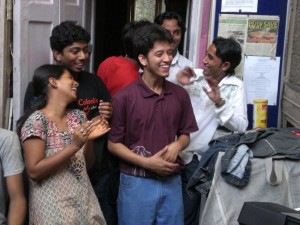
The programme's central strategy is fostering peer involvement through volunteer teaching. At the centre located in Khan Market (in the home of the project initiator, Ravi Gulati), 12 student-teachers coach 90 other students in mathematics, English, and computers. The students and teachers are underprivileged children, mentally challenged children, and students or dropouts from government schools in the locality. The students who volunteer to teach their peers are treated as individuals and encouraged to think independently.
Manzil views those who come to learn as whole individuals with many different interests and needs. Cultural, social, and explorative activities are offered; achievers and professionals regularly visit the centre to share their experiences. The children also take field trips to places such as local trade fairs, the National Science Centre, Book Fairs, and the Nehru Planetarium. A theatre workshop based on the National School of Drama's Theatre in Education programme is also offered at Manzil.
Run entirely by Ravi Gulati's mother, the Kotla Mubarakpur centre focusses on pre-school and youth education and parental counseling. For example, about 40 children aged 2-5 are taught the formal concepts of colour, shape, size, numbers, and are introduced to pre-writing and pre-math concepts. There are activities designed to foster for the physical, intellectual, and creative growth of the children. In addition, youth ages 15 to 25 are taught basic reading, writing, and numerical skills. Counseling sessions are also regularly held for normal as well as mentally challenged children. Assistance is provided to students who are seeking jobs and struggling to make career choices. Skills like sewing and embroidery are taught for self-employment and income generation.
One strategy, as Gulati puts it, is to "create the feel of a family rather than an institution". No money is taken from the children, provided they do not arrive late for class. Gulati, his immediate and extended family, and friends have organised, carried out, and funded all Manzil activities on their own.
Children, Youth, Education, Early Childhood Development, Economic Development.
Gulati says he initiated this programme to address the inequality between public and private school education - in terms of quality as well as cost. "I have no formal qualifications in the field of education. Instead I have an MBA..." He envisions more such community learning centres developing in other cities and towns. Rather than initiating these programmes himself, he would like them to grow on their own - organically and naturally - and become self-supporting through the dedication and energy of participants.
Posting from ICICIcommunities to The Communication Initiative, sent September 2 2003; "Manzil: Where children learn and grow, naturally" by Prayas Abhinav (InfoChange News & Features, August 2003); and Manzil website, accessed on September 21 2009.
Comments

thanking you for your efforts .
i knew about your organization from a tv program at utv bloomberg called unstoppable indians . thanks for your efforts you made for the society around you.

- Log in to post comments