











































LINKAGES Project
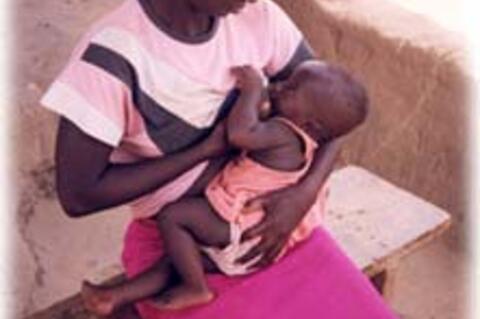
The programme, begun in nine northern districts, drew on existing networks and community-based approaches. Interventions included training and BCC through radio programmes, print media, interpersonal counselling, community events, and mother-to-mother support groups. As part of the campaign, community health promoters distributed small fliers, the size of a playing card, to community members, which provided information about promoting exclusive breastfeeding for the first six months. It uses a familiar image of a breastfeeding mother that appears on the counselling cards, the newsletter, and other project materials.
The programme worked closely with local broadcasters; these relationships resulted in what were intended to be entertaining and technically accurate programmes that appealed to listeners. Some radio programmes broadcast songs and interviews with mothers that had been recorded during training exercises in the communities. Over four years, approximately 500 radio broadcasts were made. The programmes, broadcast in English and eight local languages, used a variety of formats such as radio call-in shows, quiz programmes, dramatic comedies, panel discussions, and interviews with traditional chiefs and community leaders, both male and female.
The project developed a set of counselling cards with culturally appropriate messages for pregnant women and mothers, and another set for grandmothers and traditional birth attendants. Messages for fathers were placed on posters, T-shirts, and calendars. The following examples provide insight into how the messages focused on specific behaviours and audiences, with the goal of communicating consistent messages through the media and interpersonal communication:
- "Mothers, put your baby to the breast immediately after delivery to ensure a healthy beginning for both you and your child. This will help reduce bleeding, and also protect your child from infection. The yellow milk is God's way of welcoming your baby into the world."
- "Fathers, a wise father encourages exclusive breastfeeding so his baby grows up to be strong, healthy, and intelligent. Give your wife the time she needs to breastfeed your baby."
- "Grandmothers, breast milk has everything your grandchild needs through to six months of age to satisfy and quench hunger and thirst."
Children, Nutrition.
Before the programme began, the organisers carried out a two-week message and materials production workshop, pre-testing of materials, and a six-day follow-up workshop to refine the messages and establish the strategic direction for the programme. "The research provided insights into deeply ingrained beliefs. For example, giving water early was the norm and some mothers discarded colostrum because they were told it was 'dirty.' 'In the beginning it was terrible promoting exclusive breastfeeding' reported a mother support leader from the Upper East Region."
"Mothers-in-law and husbands would ask, 'When you were born, were you not given water? How can you not give this child water? Do you want to kill him?' However, the resistance to exclusive breastfeeding started to break down when people saw that babies of 'early adopters' of exclusive breastfeeding were healthier than those who had received water."
By 2004, the programme had reached all 24 districts in the northern regions plus seven districts in four other regions. Surveys to measure progress were conducted every year; the three indicators used were exclusive breastfeeding, timely initiation of breastfeeding, and timely complementary feeding. All rates were higher than at the previous survey.
Ghana Health Service, United States Agency for International Development (USAID). Other programme partners included the United Nations Children's Fund (UNICEF) and their local government counterparts, radio announcers from three local stations, and 10 international and local non-governmental organisations (NGOs). The partners were involved in a variety of activities such as child survival, community development, mothers' clubs, micro-credit, water and sanitation, growth promotion, food distribution, and mobile clinics.
LINKAGES website on September 4 2006 and October 30 2008.
- Log in to post comments