










































Iraqi Media Three Months after the War: A New but Fragile Freedom
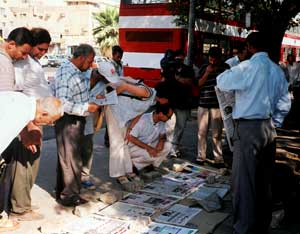
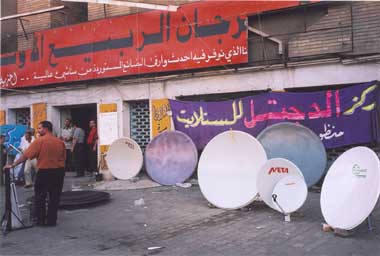
In this report, Reporters Without Borders (Reporters sans frontières, or RSF) celebrates the "wind of freedom" that "has gusted through the Iraqi media" since the fall of Saddam Hussein's regime. In these three months, roughly 85 newspapers and magazines have been launched, 20 once-banned Internet cafés provide unrestricted access to the internet in Erbil (Iraqi Kurdistan), and stores are selling satellite TV dishes again. With regard to the latter technology, one shopkeeper notes that Iraqis are more than willing to spend between $150 and $220 (the same as the fine levied during the regime for harbouring an illegal dish): "They prefer to spend a bit less on food rather than not have a satellite dish." RSF credits some of this newfound freedom with changes like the replacement of Iraqi information ministry (dissolved in May 2003) with the Iraqi Media Network, whose stated intent is to create "conditions to permit the Iraqi people to develop a free, independent, responsible and reliable media..."
However, according to RSF, these gains in press freedom are threatened by restrictions imposed on the media by United States and British coalition forces occupying Iraq. The report claims that criteria for registration and issue of broadcasting and publishing licences are very unclear. Furthermore, the Coalition Provisional Authority's (CPA) order in June 2003 banning "inimical media activity", RSF argues, encourages self-censorship. The order gives coalition troops the authority to raid premises and cancel licences on the grounds of inciting or potentially inciting violence against the CPA, inciting "racial, ethnic or religious hatred" and promoting "civil disorder, rioting or damage to property." RSF says that the military commander has the sole power to decide what constitutes incitement, and that the appeals procedure is not credible. Two media outlets have been suspended so far under the order (the radio station Sawt Bagdad and the newspaper of the Shiite Supreme Council for the Liberation of Iraq, Sada Al-Umma, or Voice of Umma).
Furthermore, working conditions remain perilous and attacks on the media continue, RSF writes. RSF says work should begin soon to draft "liberal and democratic" media regulations and laws to replace the harsh legislation of Saddam Hussein's era.
International Freedom of Expression eXchange (IFEX) Communiqué Vol. 12, No. 29, July 22 2003.

Comments

- Log in to post comments