











































Inequalities in Large‐scale Breastfeeding Programmes in Bangladesh, Burkina Faso and Vietnam
Alive & Thrive Initiative, FHI 360, Family Health International (Sanghvi); consultant FHI 360 (Godha); University of South Carolina (Frongillo)
"As breastfeeding interventions are scaled up, inequalities in coverage and breastfeeding practices should be tracked, particularly in disadvantaged groups, who are likely to suffer the most serious health and developmental impacts of poor childhood nutrition."
Evaluations of Alive & Thrive (A&T), a large initiative to improve women's, infants', and children's nutrition, had previously documented significant improvements in breastfeeding (BF). However, there was concern that A&T's BF programmes may reach the better-off and more educated mothers, who may also face fewer barriers in adopting the recommended practices. Socioeconomic inequalities, as well as geographic inequalities within countries, can undermine progress and account for slow national improvements in BF prevalence. Thus, the purpose of the study reported in this paper was to understand how the overall A&T improvements had changed inequality in BF.
The A&T programmes reached large-scale coverage mainly by integrating BF interventions into existing health services to directly support women through face-to-face counselling and through public education/media channels; structural interventions were in place in Bangladesh and actively pursued in Burkina Faso and Vietnam. Content was shaped by behavioural science principles to address underlying motivations and barriers in the adoption of BF practices, such as knowledge and beliefs, self-efficacy, family support, and social norms. None of the programmes had explicit equality objectives.
The study population comprised children under 6 months of age, with a final sample size of 998 mother/baby pairs in Bangladesh, 1,162 in Burkina Faso, and 1,002 in Vietnam. Primary data collection was conducted originally for impact assessment of the programme interventions, and this study analyses wealth and education inequalities related to BF in intervention and nonintervention areas at endline. Several categories of indicators were used for assessing inequalities, including BF practices, maternal perceptions, maternal knowledge, and BF intervention coverage. Endline surveys were conducted in 2014 in Bangladesh and Vietnam after a 4-year implementation period, and in 2017 in Burkina Faso after a 2-year implementation period.
The study found that exclusive breastfeeding (EBF) and early breastfeeding initiation (EBFI) were higher in intervention areas. In general, perception of supportive social norms by mothers regarding the recommended practices was high. Self-efficacy was higher in A&T intervention areas regarding mothers' ability to follow recommended practices immediately after delivery and for 6 months of EBF. The total maternal knowledge scores for BF were the highest in Vietnam. Knowledge of the importance of EBF for children was almost universal in all countries in both intervention and nonintervention areas, but health benefits for mothers were less well known, except in Burkina Faso.
The results on wealth inequality in BF practices show that EBF in the three countries and EIBF in two out of three countries (Bangladesh and Vietnam) were "pro-poor" in intervention areas at endline, indicating an advantage for less-well-off mothers. Programme design factors in the three study countries that may have protected BF practices among the less-well-off mothers include strengthening community-based BF services in Bangladesh delivered through home visits by incentivised volunteers and providers, intensified community mobilisation in Burkina Faso to address social barriers, and an explicit campaign to drive more mothers to primary health centres in Vietnam for BF counselling services.
Inequality in EBF by maternal education status (available only for Bangladesh and Vietnam) showed a bias towards more highly educated women. EIBF and colostrum feeding, however, favoured less-educated mothers in intervention areas in Bangladesh and Vietnam. Maternal knowledge scores favoured the more highly educated women in Vietnam and were close to neutral in Bangladesh. Perceived social norms did not show a clear pattern of inequality by maternal education status.
While counselling coverage often favoured women from the economically poorest quintile, public education/media coverage consistently favoured better-off women. Inequalities favoured more educated mothers in the coverage of combined interventions.
In conclusion: "The programmes in this study combined population-wide interventions with interpersonal interventions, but reductions in inequalities in the three country programmes did not substantially contribute to a pro-poor advantage. This is a serious gap as the deleterious health and development consequences of poor infant feeding are greater among the disadvantaged families and communities and less well-off mothers should receive priority..."
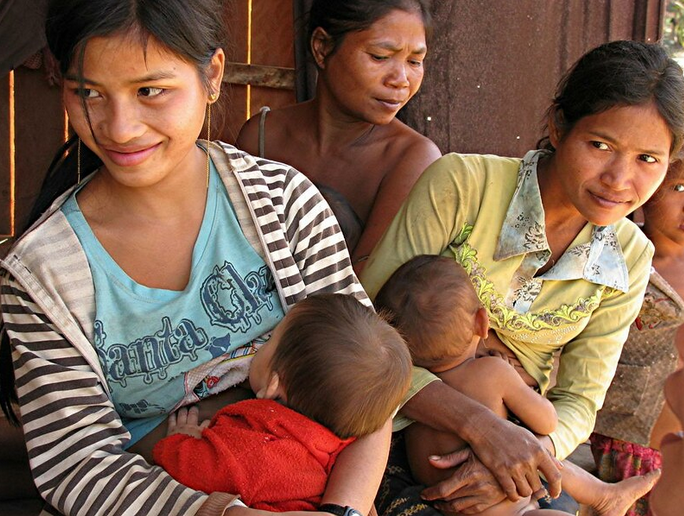
Maternal & Child Nutrition https://doi.org/10.1111/mcn.13687. Image credit: Charles Pieters via Flickr (CC BY-NC-ND 2.0)
- Log in to post comments