











































Impact of Information Society Research in the Global South
"There is a multiplicity of voices, methodologies and theoretical traditions in the interdisciplinary fields of research that investigate the role of ICTs 'in', 'for', and sometimes 'and' development. This volume includes many illustrations of the richness of approaches within the social sciences." - Robin Mansell, London School of Economics and Political Science
This 2-part volume explores theories and methodologies that can be used to yield research findings about the potential of information and communication technologies (ICTs) to make a positive difference in people's lives. It emerges from SIRCA II (Strengthening Information Societies Research Capacity Alliance), a programme funded by the International Development Research Centre (IDRC) that sought to enhance the research capacity of 15 emerging information society scholars in Africa, Asia, and Latin America through grants, mentorship, and training.
The first part of the volume is concerned with research on "impact", asking how is the research on ICTs in the Global South playing a role in achieving an information society through implementation in practice, influence on policy formulation and media coverage for shaping public opinion? In the opening chapter, Arul Chib says that "impact, even during the process of evaluation of the proposals [for SIRCA II], was difficult to define, describe, or agree upon, leading to contested debate". As Robin Mansell explains in the Foreword, for some, "impact" may mean that there is a demonstrable strong effect of the research on someone or something. For others, it may mean that it can be claimed that the research has had an influence, one that may be perceived as being positive or negative depending on where the assessor who makes this judgement is situated. Different actors will have contradictory views about what can be claimed as "impact" even in cases when there is agreement about the value of participatory research. Even if impact assessment tools detect that change has happened and that ICTs are implicated in that change, Mansell says that it matters whether ICTs have been introduced in a way that is inclusive, just, and equitable (which can be a struggle, because competing normative frameworks may be involved). Because there is so much controversy about how to measure the impact of academic research, it is suggested that researchers themselves need to work out how their own commitments to enabling positive change through research can be enhanced by exploiting opportunities within the "impact" agendas of others. Thus, "building capacity within research communities for the strategic exploitation of an always shifting impact agenda is crucial."
The second part of the volume sets out how research in the global South is contributing to our understanding of the information societies in these regions, asking what is the evidence of the impact of ICTs on society (i.e. the end objectives of socio-economic development). The SIRCA scholars address the implications of the development and implementation of ICTs for poverty reduction, mobile financial and education services development, the reduction of cybercrime, strengthening women's entrepreneurship, and creating new online spaces for public consultation and the expression of public opinion. One theme highlighted in these chapters is the value of collaborative effort that provides mentoring for researchers and supports their initiatives through dialogue with each other and with interested others.
Mansell argues that coherence of this volume (and of the research programme) lies not in any specific theory or method that is privileged but in the way research questions are posed and the rationale for undertaking the research programme in the first place. Core principles include, first, understanding the impact of ICTs within information societies requires a commitment to the analysis of developmental change in a way that extends beyond the economic dynamics of the marketplace. Second, there needs to be a commitment, regard less of theoretical or methodological stance, to participatory research and especially to participatory action research that insists on local stakeholders being able to engage with choices that are made in the process of implementing ICTs. Linked to this is ensuring that research is as much about discovery (i.e. the causes of things) as it is about making change in the world in a way that is inclusive and consistent with values of justice and equity.
Chapters include:
Research on the Impact of the Information Society in the Global South: An Introduction to SIRCA, by Arul Chib Ph.D.
Part I: Impact of Research
- The Impact of Research on Development Policy and Practice: This Much We Know, by Roger Harris
- Constructing Theories of Change for Information Society Impact Research, by Alexander Flor
- A New Set of Questions: ICT4D Research and Policy, by Andrea Ordóñez
- Progress Towards Resolving the Measurement Link Between ICT and Poverty Reduction, by Julian May Ph.D. and Kathleen Diga
- The Impact of mFinance Initiatives in the Global South: A Review of the Literature, by Arul Chib Ph.D., Laura León, and Fouziah Rahim
- An Analytical Framework to Incorporate ICT as an Independent Variable, by Matías Dodel
Part II: Research on Impact
- (Un)Balanced Conversations: Participatory Action Research in Technology Development in Peruvian Primary Schools, by Paz Olivera, Komathi Ale, and Arul Chib Ph.D.
- The Institutional Dynamics Perspective of ICT for Health Initiatives in India, by Rajesh Chandwani and Rahul De
- Cybersex as Affective Labour: Critical Interrogations of the Philippine ICT Framework and the Cybercrime Prevention Act of 2012, by Elinor May Cruz and Trina Joyce Sajo
- The Internet and Indonesian Women Entrepreneurs: Examining the Impact of Social Media on Women Empowerment, by Ezmieralda Melissa, Anis Hamidati, Muninggar Sri Saraswati, and Alexander Flor
- The Use of Mobile Communication in the Marketing of Foodstuffs in Côte d'Ivoire, by Kabran Aristide Djane and Richard Ling
- Designing Web 2.0 Tools for Online Public Consultation, by Fabro Steibel and Elsa Estevez
- ICTs and Opinion Expression: An Empirical Study of New-Generation Migrant Workers in Shanghai, by Baohua Zhou
- Impact of Research or Research on Impact: More Than a Matter of Semantics and Sequence, by Julian May Ph.D. and Roxana Barrantes Ph.D.
Publishers
293
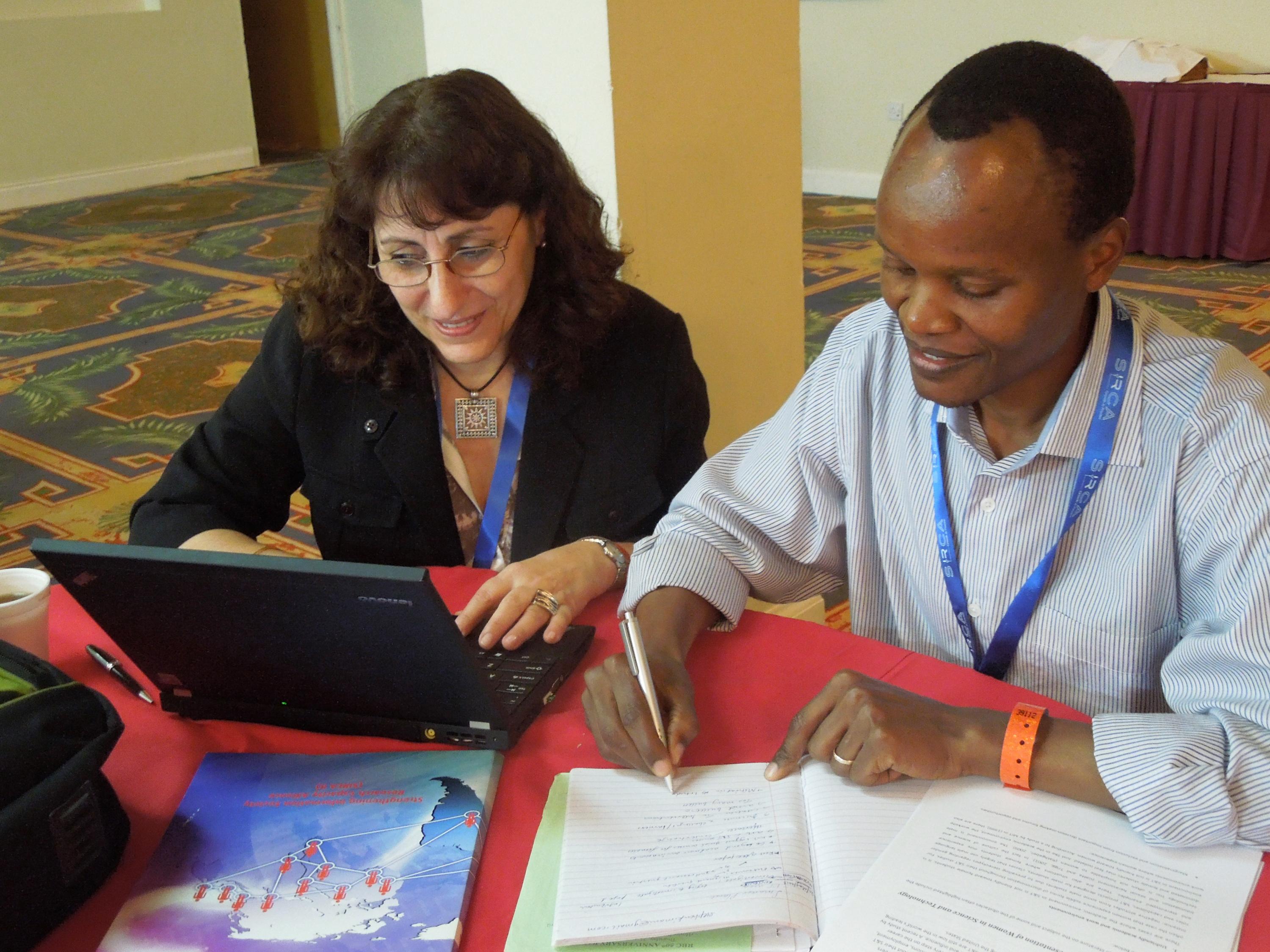
C4D Network Slimline Twitter Trawl: 4 - 10 May 2015, accessed on February 5 2016; and IDRC website, February 5 2016. Image caption/credit: "Workshops like this SIRCA II session in Jamaica provide researchers with training" - Yvonne Lim
- Log in to post comments