
























Development action with informed and engaged societies

After nearly 28 years, The Communication Initiative (The CI) Global is entering a new chapter. 

Following a period of transition, the global website has been transferred to the University of the Witwatersrand (Wits) in South Africa, where it will be administered by the Social and Behaviour Change Communication Division. Wits' commitment to social change and justice makes it a trusted steward for The CI's legacy and future. 

On the transfer, co-founder Victoria Martin expressed her pleasure to see this work continue under Wits' leadership, knowing that co-founder Warren Feek (1953–2024) would have felt deep pride in The CI Global's Africa-led direction. 

As Wits, we honour the team and partners who sustained The CI for decades and look forward building from that strong base. This includes co-founders Warren Feek (1953-2024) and Victoria Martin as well as La Iniciativa de Comunicación (CILA), which continues independently at lainiciativadecomunicacion.com with links to The CI Global site. We are also eager to forge new partnerships and entertain new ideas as we consider how best to contribute to social and behaviour change in our rapidly evolving environment.

If you are joining the International Social and Behaviour Change Communication (SBCC) Summit in Panama, please join Wits and CILA on Monday, 22 June, to share your thoughts and suggestion for the relaunch of the Communication Initiative. We will be in Pacifica 5 from 12-1:25 for the Refuel, Reflect, and Renew Lunch Series: The Communication Initiative: celebrating a driving force for Communication for Social Change and the way forward. We will reflect on the legacy of Warren Feek and family in creating the Communication Initiative, consider the contributions of CI over the years and then turn our attention towards the future in this dynamic session. 

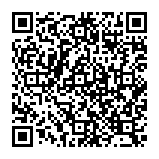
If you are unable to join us in Panama, we still want to hear from you. Please contribute your thoughts by following this link: https://redcap.link/CommunicationInitiative2026 or reaching out to ci_surveys@commint.com

You can also follow the QR Code:

 https://redcap.link/CommunicationInitiative2026

Time to read
2 minutes
Read so far

Impact Data - HIV Prevention Education for High School Students

0 comments

This programme uses interpersonal communication and entertainment-education strategies to address knowledge, attitudes, and behaviours related to HIV and other sexually transmitted infections (STIs) among high school youth in urban Nigeria. Results of a baseline survey conducted to plan programme approaches/activities indicated that most students (83%) knew about the sexual transmission of HIV, but few knew about other transmission routes; knowledge was higher among older than younger youth. Twenty percent felt that HIV and AIDS was not a medical problem in Nigeria, and 83% said they would dislike being around anyone with HIV or AIDS.

In this context, the in-school health education programme draws on behaviour change theory in an attempt to change behaviours by helping young people understand that a problem (HIV and AIDS) exists. The programme uses experiential activities, including role-plays, stories, songs, debates, and essays, as well as films and more traditional lectures. The programme also includes a demonstration on the proper use of condoms.

Methodologies
This quasi-experimental evaluation used a randomised, control design in four urban high schools in an older, economically poorer, local government area (LGA) of Ibadan, Lagos State, Nigeria. Eleven mixed-sex public schools in the LGA being addressed were divided into two groups, based on geographic location. Two adjacent schools in one group were chosen as the intervention schools; two comparison schools were randomly chosen from the other group. From senior high classes 1, 2, and 3 in each school, two arms (each consisting of 20 to 25 students) were randomly chosen to participate in the study. At baseline, the intervention and comparison groups were matched, with no statistical differences in their mean age, gender, class, religion, or parental background.

Baseline and follow-up surveys were carried out in January and February 1996 and at six months post-intervention in August 1996; the baseline questionnaire was administered in Yoruba, the native language, to 450 randomly selected students in intervention and comparison schools and the follow-up survey was conducted among 433 students who completed the baseline survey. There were no significant differences between intervention and comparison students in terms of HIV knowledge and awareness at baseline. Also at baseline, no statistically significant differences existed in the proportion of students who were sexually active, mean age at first sex, condom use at most recent sexual intercourse, or past medical history of STI.
Knowledge Shifts
At 6 months post-intervention, knowledge about methods of transmission of HIV as well as knowledge of prevention methods had increased significantly more among intervention than comparison students. For example, 95% of intervention youth knew that HIV could be transmitted from a pregnant woman to her unborn child, versus 43% of comparison youth. Ninety-two percent of intervention youth knew that an HIV-infected person could look completely healthy, versus 41% of comparison youth. Ninety-six percent of intervention youth knew that using condoms decreases the risk of HIV transmission, versus 63% of comparison youth.
Practices
Delayed initiation of sexual intercourse: At 6-month follow-up, 76% of intervention students reported no sexual experience, versus 62% of comparison students. At the same time, the change from baseline to follow-up was substantial among intervention youth (from 67% to 76%) while remaining virtually unchanged among comparison youth (from 61% to 62%).

Reduced number of sex partners At 6-month follow-up, there was a statistically significant difference in the mean number of sexual partners reported by the sexually experienced intervention youth versus sexually experienced comparisons (1.060 and 1.312, respectively).

Increased use of condoms A higher proportion of sexually experienced intervention students than comparisons reported condom use at last intercourse (54% versus 43%). Similarly, 20% of the sexually experienced intervention students reported consistent condom use versus 13% of the comparison students.
Attitudes
Awareness of HIV and AIDS and attitudes towards those living with HIV or AIDS were significantly improved among intervention youth at 6 months post-intervention. For example, 93% of intervention youth felt that HIV was a problem in Nigeria, versus 57% of comparison youth. Among intervention youth, 79% felt they could touch and care for someone living with AIDS, versus 14% of comparison youth.
Other Impacts
The evaluation also found that the recent history of sexually transmitted infections (STIs) decreased among intervention youth (from 4% at baseline to 2% at 6-month follow-up) while rising among comparison youth (from 2% to 3%). This finding was not statistically significant. Researchers also found a greater reduction in the proportion of intervention students who engaged in sexual intercourse in the month preceding the post-test survey versus comparison students, even though the proportions decreased in both groups between baseline and follow-up. This change was also not statistically significant.