











































How to Improve Outbreak Response: A Case Study of Integrated Outbreak Analytics from Ebola in Eastern Democratic Republic of the Congo
United Nations Children's Fund (UNICEF) New York (Carter, Zambruni, Colorado, Esmail); Institut National de Recherche Biomédicale (Ahuka-Mundeke); Prince Leopold Institute of Tropical Medicine (van Kleef); Epicentre (Lissouba); London School of Hygiene & Tropical Medicine (LSHTM) Faculty of Epidemiology and Public Health (Meakin); World Health Organization, or WHO (de Waroux, Degail); LSHTM (Jombart); Ministry of Health, Kinshasa (Mossoko, Nkakirande); Centers for Disease Control and Prevention, or CDC (Earle-Richardson); UNICEF Brazzaville (Umutoni); WHO Regional Office for Africa (Anoko); University of Oxford (Gobat)
"The inclusion of a broad range of response actors, including government and non-government organisations within the CASS studies, reinforced relationships with the end line data users, contributing to CASS credibility and trust."
During the 2018-2020 Ebola outbreak in Eastern Democratic Republic of the Congo (DRC), the Cellulle d'Analyse en Sciences Sociales (Social Sciences Analytics Cell) (CASS) developed organically in response to needs expressed by response actors to understand the outbreak from a holistic epidemiological, social, and behavioural perspective. This paper discusses key characteristics of the CASS model, its usefulness and challenges, and aspects that could be improved for its use in future outbreaks. It is based on a review of CASS documents and a 2-week externally led consultation that included interviews with 79 stakeholders from different levels of the Ebola outbreak response in the DRC.
As outlined here, the process that led to a formal set-up of CASS began in October 2018, when a United Nations Children's Fund (UNICEF)-deployed social epidemiologist conducted a qualitative study to better understand the situation for pregnant and lactating women with regard to Ebola vaccination. This first study directly supported response pillars including psychosocial, surveillance, vaccination, and epidemiological teams to better integrate those non-eligible for the vaccine. A series of studies followed that revealed the CASS's ability to rapidly provide relevant evidence and to produce recommendations that were co-developed with response actors. Findings were regularly and systematically presented to partners, and the implementation of the recommendations based on CASS analytics was monitored over time to measure their impact on response operations.
Key features related to the success of the CASS included: (i) the importance of senior leadership endorsement of the approach, (ii) the practical translation and use of evidence in coordination meetings, (iii) the strategic positioning of the unit, alongside the epidemiological cell and (iv) physical presence at both field and response coordination level of the response, to ensure the operational relevance of key questions addressed by the CASS and that both epidemiological and sociobehavioural approaches to those could be addressed in concert. A key success of the CASS was the collaborative ethos and open sharing of all tools, studies, and results.
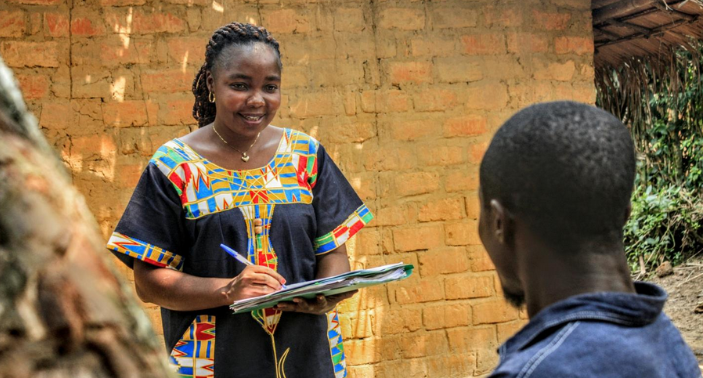
Along those lines, it is notable that local and national staff were key to the CASS's ability to rapidly conduct studies in that they were familiar with local culture, community, and language and were able to rapidly build trust and respectfully gain access to households and to healthcare facilities and staff. A key CASS priority was to reinforce the operational research capacity of the Congolese teams, including their ability to communicate results and to build relationships with stakeholders. At the end of the outbreak, the local research teams were supported to build a small network among themselves for future localised, evidence-based programmes and response.
Since the events described above, the CASS has been active in four events: three in the DRC (Ebola in Equateur province, cholera, and COVID-19) and one in Guinea (Ebola). In the DRC during COVID-19, CASS worked to bring in additional data sources to extend the integration of different perspectives, such as by providing evidence of the negative impacts of COVID-19 Public Health and Social Measures on communities. Aiming to influence and change response strategies, one focus of CASS in this context has been on the impacts of the pandemic on the sexual and reproductive health, nutrition, and safety and security of women and girls. The adaptation has, however, presented challenges, in part due to the scale of the needs. CASS teams have continued to provide routine support via presentations and coaching on the use of key study results, lessons learned, and strategies to replicate similar approaches both at a global and regional level.
In conclusion: "The documentation of all tools, training materials as well as question banks, lessons learnt and hands on available support from CASS teams has been made available to actors working in outbreak response. In this way, others can access the CASS model and ways of working and adapt it for different contexts and outbreak scenarios, to generate and use integrated outbreak analytics for more effective response to public health emergencies."
Editor's note: Click here for more information on CASS and links to CASS reports; click here to access CASS's YouTube channel.
BMJ Global Health 2021;6:e006736; and email from Simone Carter to The Communication Initiative on August 23 2021. Image credit: © UNICEF DRC Wenga
- Log in to post comments