










































Heartlines "What's Your Story?" Summative Evaluation
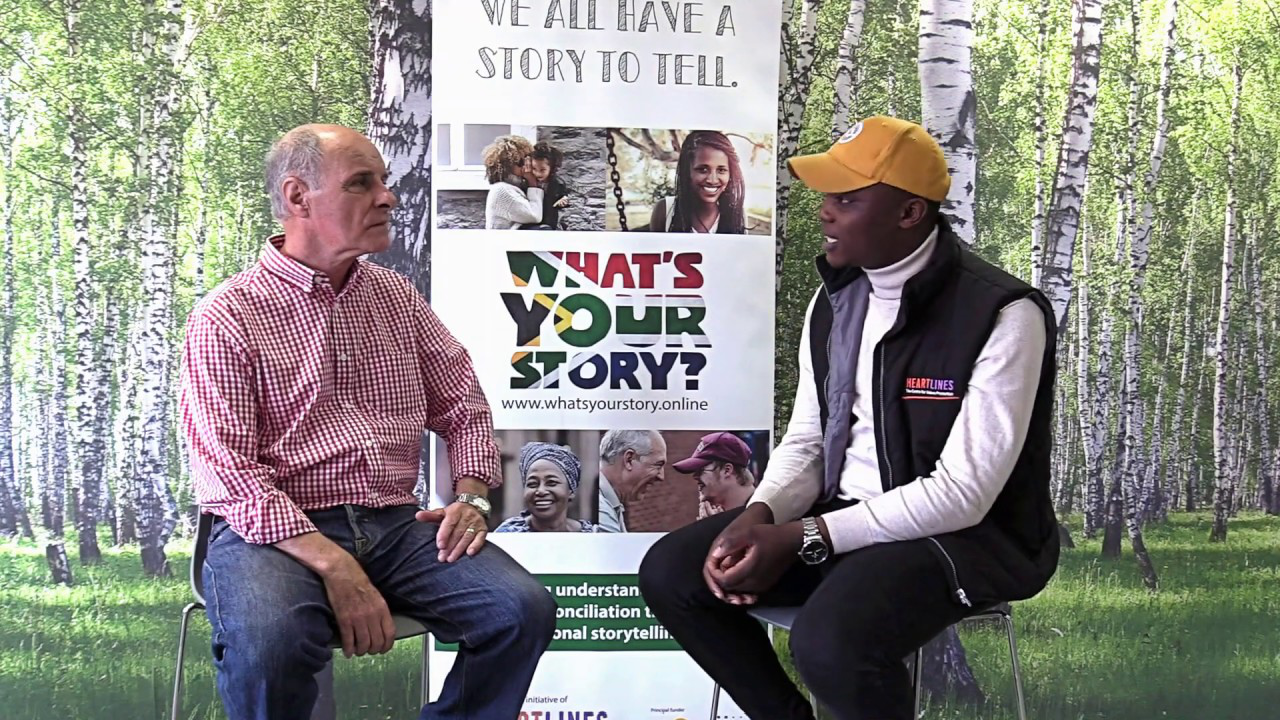
"Can a campaign that encourages people to tell each other their personal stories, in supportive contexts, increase empathy amongst those involved? Does the fostering of greater empathy of individuals for each other in group settings improve cohesion and, therefore, the functioning of the group?"
"What's Your Story" (WYS) is a South African social change initiative, developed by Heartlines and funded by the Templeton Religion Trust, that supports people telling their development stories. (See Related Summaries, below, for details.) To date, Heartlines has distributed over 8,750 WYS resources, trained 3,540 leaders in personal storytelling, conducted leadership engagements for hundreds of sector leaders, and undertaken more than 300 events in faith-based organisations and over 50 sessions in 20 workplaces. To understand how effective these activities have been in building connections and cultivating a stronger sense of community in different contexts through story-sharing, Heartlines commissioned Singizi Consulting Africa to evaluate WYS as implemented from July 2017 until March 2020. This report primarily focuses on WYS in churches, although, as is evidenced in this report, WYS cascaded in most cases from the church to different workplaces, as well as more broadly into the surrounding community.
The methodology for the evaluation started with the development of a programme theory (which was later adapted to the specifics of churches and workplaces): If Heartlines develops relevant resources and then provides training and other activities, this will result in:
- Participants seeing the value of the approach and developing an interest in sharing stories;
- Participants feeling affirmed by the process;
- Participants developing empathy as a result of engaging with WYS;
- Participants committing to adopting new values; and
- There is greater social cohesion - which would, in turn, contribute to the promotion of the virtue of empathy (where increased empathy is marked by a decrease in negative attitudes and actions around prejudice and racism and increased acts of caring, especially for the "other".)
Using this theory as the basis for a monitoring and evaluation (M&E) framework, Singizi used a mixed-methods approach that included: a retrospective baseline survey that gathered data on perceptions of the programme, activities conducted since exposure to the programme, and perceptions of change as a result of the programme; qualitative in-depth interviews; and eight qualitative case studies.
The evaluation found that:
- 44% of the participants indicated that since being part of a WYS experience they had listened to someone else's story.
- 24% of participants indicated that since undertaking WYS they had told their story to someone else.
- When asked to provide reasons for adopting WYS, 29% of respondents indicated they wanted to improve relations between people in their organisation.
- 18% indicated they wanted to break down a barrier through the sharing of stories.
- In the formative evaluation, church data from the retrospective baseline showed that after being exposed to the WYS methodology, 42% of respondents had engaged in further intentional storytelling with others. In comparison to this, in the summative evaluation, a full 80% of respondents reported that they had engaged in further storytelling processes with others.
With regard to specific levels/locales:
- In churches, the findings provide evidence that WYS can and does result in positive change at the level of the individual, amongst parishioners within a church, within the church itself, between churches, and between churches and the surrounding community. At a personal and interpersonal level, these changes include increased confidence, a greater level of curiosity of others, improved trust, and better relationships. Of import is that there is also evidence that these changes contribute to the strengthening of the institution and even, in some cases, increased participation in the activities of the church.
- In workplaces, reported changes include improved communication and trust, which are considered central to strengthening teamwork, building new forms of relationships in the workplace, and supporting a culture of trust and respectful communication.
Other key findings:
- The majority of people who have done WYS are using the approach in their broader communities (including church, family, community-based organisations, schools, and workplaces).
- WYS is simple and accessible for people of different races, genders, and ages.
- Once someone has adopted story-sharing, they are likely to implement it more than once.
- People find Heartlines resources very valuable and have used them to share WYS more widely within the community. However, not everyone seemed aware of these resources, and others may not be able to access these online.
- The greater the number of individuals within the organisation who are exposed to the WYS method, the more it is embedded into the institution, and the greater the effect WYS has on levels of cooperation and collaboration.
- Meaningful change takes time and requires reinforcement; many respondents suggested they would have valued additional engagements about the programme in order to deepen their understanding and their skills to take WYS forward.
WYS was designed as an easy-to-implement intervention that could be used in a number of interactive contexts that could readily be adopted and rolled out by others. A key indicator of success, therefore, was whether or not those exposed to WYS take it up and undertake further WYS-related interventions. Some of the factors that affected take-up of WYS include whether the introduction allowed participants the opportunity to engage in a practical storytelling process (sometimes coupled with other activities) and whether respondents had access to training and/or a "Bridge" intervention (see video, below). In addition, where respondents had a positive experience in the storytelling process, they were more likely to take up WYS. This was also the case when the respondent personally experienced a change or shift within themselves. Finally, where respondents were clear about what the purpose of WYS was, they were more likely to adopt it.
Some of the factors that emerged as important in promoting change:
- Having a champion: someone who believes in the method, is passionate about making a difference, and can plan and follow up with others where required;
- The degree to which people share (the more they share, the easier it gets); and
- Having access to a range of practical tools to continue to share stories.
Some hindering factors include: the complexity of the change-journey and the iterative nature of change; not being experientially exposed to a story-sharing process at the point of introduction to WYS; discomfort with sharing on the part of some individuals; lack of access to resources (or knowledge of these); and concern about how to respond to some of the revelations made in the course of story-sharing. Recommendations for overcoming these barriers are offered - for example, when introducing WYS, ensure that everyone who is willing has the opportunity to test storytelling out, and make efforts to provide some additional training, where possible.
The report outlines issues for Heartlines to consider, going forward, such as whether it can integrate WYS as a methodology within and across its other programmes. This includes a consideration of whether there are ways that WYS can support the development of empathy in more deliberate ways in its programming to address specific challenges with "othering" in communities (such as xenophobia) or to address specific societal issues (such as the role of fathers).
In conclusion: "what is evident is that whilst WYS is a relatively low-cost intervention, it supports significant changes in values and, as a consequence, greater levels of cohesion. This emphasises that in an increasingly polarised world, there is a need to sustain this effort and to consider ways to both expand this programme and to deepen the on-going support that is provided."
Email from Garth Japhet to The Communication Initiative on March 1 2021; and Heartlines website, March 1 2021. Image credit: Heartlines via YouTube
- Log in to post comments