










































Great Lakes Reconciliation Radio Project
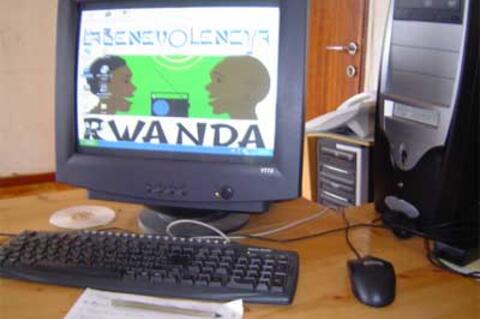
This project counteracts the role of hate media by developing radio material that sensitises the population of all 3 countries to resist mass media manipulation and to focus on unbiased treatment of and critical reading of information. It supports a democratic environment by educating the population to consume news and media with a critical eye - hopefully thereby preventing incitement and further violence.
These activities rely on a thoroughly researched and evaluated broadcast campaign which disseminates knowledge, gained from applied psychology and genocide studies, to a large audience. The campaign employs what are envisioned as popular and entertaining radio formats to make audiences aware of the similarity of mechanisms at work everywhere in the world where instigation to genocide has happened. This is a strategy for helping individual audience members become aware of similar mechanisms at work within themselves. The campaign demonstrates methods and ways to resist the work of these mechanisms on participants' own psyches. The project also shows ways to deal with and heal trauma (their own as well as their neighbours') - thought to be a major factor in both the instigation and the consequences of violence.
The project’s specific programmes include:
- Serial radio dramas: Conception, production and broadcasting of entertainment-education serials for broadcast on national and private radio stations. For example, launched in mid-August 2007, "Murukura Ukuri" explores - in a dramatic and entertaining way - a conflict between two groups, the Baseruko and the Barengero, who live in a fictitious rural community and who are struggling to smooth out deep-seated ethnic conflicts. Based on messages created by psychologists and produced in the Kirundi language, "Murikura Ukuri" follows both the funny and tragic aspects of the lives of different characters. The goal is to expose the audience to the origins of the violence that divides ethnic groups, and to mirror strategies for preventing the conflict that can result. The serial also seeks to educate listeners about the post-conflict phase, exploring how to address post-traumatic injuries and how to create an effective, neutral justice system.
- Public debate programmes: Conception, production and broadcasting of public discussion debate programmes on the “roots of evil”, or the origins of group and mass violence as been explained in the continuum of violence/destruction. The goal is to empower people to use their know-how effectively in their day-to-day lives.
- Listening groups and grassroots activities: Set-up of a network of representative (for the whole population) listener groups to provide feedback, act as a sounding board, and bring together grassroots supporters of the project in the field. (Editor's note: to learn more about the latest grassroots activities which are ongoing in Rwanda, please see the contact information below to request a copy of the programme newsletter, in French, which provides updated details.)
- Impact evaluation: Academic research, baseline studies, and adapted impact measurement techniques developed to achieve maximum results in healing what RLB describes as the enormous psychological and social damage created by the genocide in Rwanda and the civil wars in Burundi and Eastern DRC.
Great Lakes Reconciliation Radio is also working to widen the scope of the communication campaign to include support to the justice and reconciliation process. This process is undertaken by the Rwandan Gacaca, which are village tribunals designed to deal with the huge number of suspected perpetrators in the 1994 genocide. According to RLB, the Gacaca provide post-genocidal Rwanda with hope but at the same time also pose a risk. On the one hand, RLB explains, they can contribute to justice, healing and reconciliation; on the other, the process also reawakens memories of the genocide and in some cases brings tensions in communities to the surface. For this reason, RLB is also involved in activities that are designed to counter negative side effects related to Gacaca.
Conflict.
RLB explains that, for the last 40 years, the Great Lakes region (one of the most densely populated areas of the world, with an estimated population of 107 million) has never known enduring peace and stability. From 1960s to the 1980s sporadic violence was recurrent in each of the countries that form the region, which is comprised of Burundi, the eastern part of the DRC, Rwanda, the western part of Tanzania, the southern part of Uganda and portions of Kenya. From 1990 on, the situation worsened. The area witnessed a genocide that took close to a million lives in 1994 in Rwanda, rebellions and repressions that killed more than 350,000 people in Burundi between 1993 and 2004, and civil wars and foreign invasions that caused directly or indirectly the death of around 3.5 million people in the DRC. RLB suggests that this immense violence has left most people traumatised; their unhealed wounds may fuel further cycles of violence.
National Unity and Reconciliation Committee (NURC).
RLB website on May 11 2006; and email from Johan Deflander to The Communication Initiative on August 4 2007.
Comments

- Log in to post comments