










































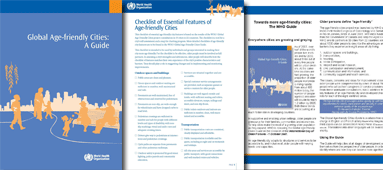
Global Age-friendly Cities: A Guide
Image
SummaryText
From the World Health Organisation Press website:
"Population ageing and urbanization are two global trends that together comprise major forces shaping the 21st century. At the same time as cities are growing, their share of residents aged 60 years and more is increasing. Older people are a resource for their families, communities and economies in supportive and enabling living environments. WHO regards active ageing as a lifelong process shaped by several factors that, alone and acting together, favour health, participation and security in older adult life. Informed by WHO's approach to active ageing, the purpose of this Guide is to engage cities to become more age-friendly so as to tap the potential that older people represent for humanity.
By working with groups in 33 cities in all WHO regions, WHO has asked older people in focus groups to describe the advantages and barriers they experience in eight areas of city living. In most cities, the reports from older people were complemented by evidence from focus groups of caregivers and service providers in the public, voluntary and private sectors. The results from the focus groups led to the development of a set of age-friendly city checklists presented in this guide."
The contents are as follows:
By working with groups in 33 cities in all WHO regions, WHO has asked older people in focus groups to describe the advantages and barriers they experience in eight areas of city living. In most cities, the reports from older people were complemented by evidence from focus groups of caregivers and service providers in the public, voluntary and private sectors. The results from the focus groups led to the development of a set of age-friendly city checklists presented in this guide."
The contents are as follows:
- Introduction: about this Guide
- Part 1. Global ageing and urbanization: meeting the challenge of humanity’s success
- Part 2. Active ageing: a framework for age-friendly cities
- Part 3. How the Guide was developed
- Part 4. How to use the Guide
- Part 5. Outdoor spaces and buildings
- Part 6. Transportation
- Part 7. Housing
- Part 8. Social participation
- Part 9. Respect and social inclusion
- Part 10. Civic participation and employment
- Part 11. Communication and information
- Part 12. Community support and health services
- Part 13. Wrapping up and moving forward
Publishers
Publication Date
Number of Pages
82
Source
Email from Carla Salas-Rojas to The Communication Initiative on November 1 2007. Image of this resource used by permission of the World Health Organization (WHO), holder of the copyright on this resource.
Comments

- Log in to post comments