











































Gender, Masculinities and Bus Journeys
Bus journeys are fairly intimidating for women and girls, especially during the morning and evening peak hours. They also pose special risks for men and boys.
Why is this so? Separate seats are to be allocated for women in government run buses, but it is not clear which seats are for women and never are 50% of seats allocated for women. As a result, women have to stand for much of the journey. Women juggle domestic work and work outside, and, being overworked, a place to sit contributes to their wellbeing. It is a concern that with privatization of transport the protected seats for women are getting eroded.
Yet another issue is the presence of drunk male passengers, with government run liqour shops in the state of Tamil Nadu open from 10 A.M. Some pass lewd remarks. A few bus conductors (all male) and drivers (all male) do not allow them to get on board, while others do permit them entry into bus. Further, sexual harassment by some of the sober men and youth is not uncommon, especially on a crowded bus.
Bus stands - the places were buses are parked - are not clean. Apart from plastic being thrown around, a problem is the use of the bus stand as a public urinal by men. Even when there are paid toilets (very small cost) they are not used. While construction of masculinities affects women and girls adversely, it also affects men and boys. They are the ones who hang out of the bus when it is over crowded, putting themselves in danger of a traffic accident. Ability to hang out of the bus is considered a sign of being macho. Further, they are the ones who jump out of a moving bus. More men and boys die in such accidents than women and girls. On the positive side, some buses carry messages against alcohol abuse and whom to contact for help.
What can be done to make bus journeys safer for women, girls, men and boys?
- Reserve 50% of seats for women and girls in both public sector buses and private ones
- Install CCTV cameras in buses to capture any cases of sexual harassment of women and girls
- Providing a help line number for women and girls who face sexual harassment in buses
- Increase proportion of women drivers and conductors to 33% in the short run of three years and 50% in the long runs
- Train conductors and drivers on gender, masculinities and bus journeys, preferably build it into their curriculum
- Ensure that liqour shops are open only after 7 P.M.
- Preferably, replace open door buses with closed door ones
- Run programs with boys/male youth in schools and colleges on bus travel and safety Strictly ban use of bus stands as urinals.
- Public messages on bus against various forms of high risk behaviour by men and boys
By Ranjani.K.Murthy rk_km2000@yahoo.com
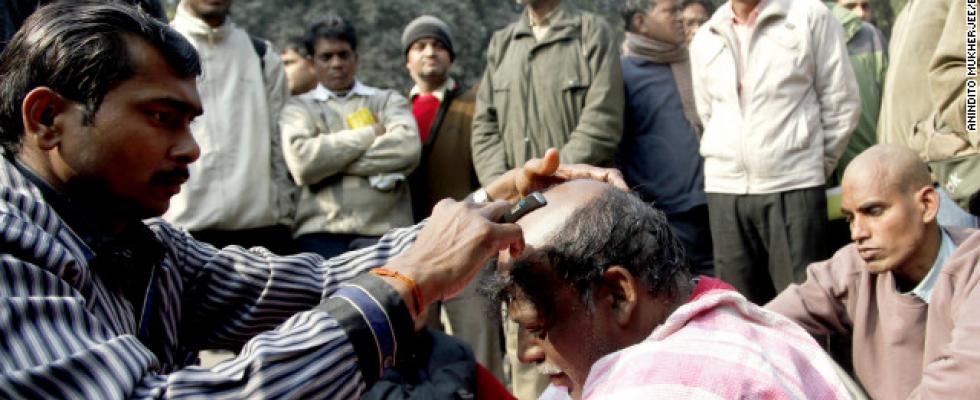
Image credit: Ripple News website - An Indian activist gets his head shaven in protest against the Dehli gang-rape related to bus transport
- Log in to post comments