











































Engaging Medical Associations to Support Optimal Infant and Young Child Feeding: Lessons Learned From Alive & Thrive
"Medical communities around the world play an important role in educating families about early child nutrition. Creating an enabling environment for mothers and families to adopt optimal IYCF [infant and young child feeding] practices is dependent upon medical practitioners who are committed to implementing evidence-based best practices in their own work."
From Alive & Thrive's 2010-2014 work in Bangladesh, Ethiopia, and Viet Nam to reduce undernutrition and death caused by sub-optimal infant and young child feeding (IYCF) practices, this document describes working with leadership of health practitioners at all levels to protect, promote, and support breastfeeding. It is part of a series of documents on best practices and lessons learned in policy advocacy in the three country contexts. (See related summaries below.)
The initiative found that "once medical practitioners leave school, there is often little opportunity for continuing medical education." Thus, practitioners reported confusion about IYCF guidelines and best practices, confounding their ability to set recommendations within communities and advocate to national ministries and legislative bodies. This evidence supports a need for seeking out champions, training for advocacy, and dissemination of materials for advocacy to partnering medical associations.
For medical associations that included pediatric, obstetrics and gynecology, midwifery, nursing, and nutrition associations, "Alive & Thrive set out with the following broad goals:
- Elevate the voices of key association leadership and spokespeople in support of IYCF and related policies, with both the media and with policy-makers.
- Ensure strong and visible association commitment to promote optimal IYCF - and especially exclusive breastfeeding - and to not promote breastmilk substitutes unless medically necessary.
- Leverage association networks to support adoption and implementation of national IYCF policies."
The following are examples of Alive and Thrive's engagement tactics:
- "Develop tailored advocacy materials designed to fit the medical association’s existing communications platforms with its membership, including:
- Specific IYCF recommendations that associations can adopt and publish; this could include a simple overview of recommended practices, or a detailed guide for medical practitioners based on global IYCF materials.
- Editorial articles, highlights, and research updates that can be featured in association communications platforms (newsletter, website, etc.).
- Paid advertisements in association magazines.
- IYCF web content to be featured on the association’s website; request space on their homepage for the launch of major events such as World Breastfeeding Week.
- Cultivate medical association champions to be spokespeople and advocates for IYCF, by:
- Conducting a champion training to provide association leadership with practical tools for speaking with the media, giving speeches at key events, and raising their voice publicly in support of IYCF.
- Creating opportunities for champions to speak with the media by using them as spokespeople around the release of new research and other major announcements.
- Inviting high-profile champions to lend their name and voice to the issue by authoring an op-ed calling for greater commitment to IYCF and child nutrition.
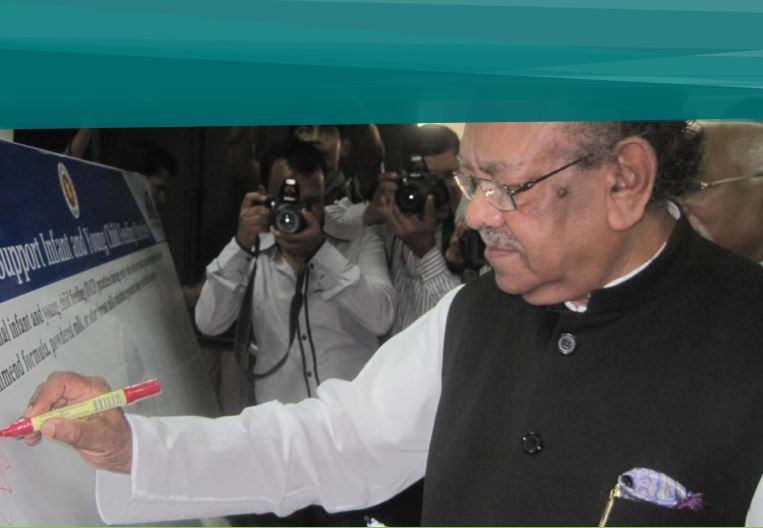
- Issue an IYCF pledge for members of medical associations, demonstrating broad-based medical community support for IYCF. The pledge can be deployed across multiple communications channels, including posting pledge boards at major events, conducting informal hand raises at an event, or hosting an online pledge form on an association’s website.
- Host workshops for the medical community to ensure practitioners are aware of the evidence-base that informs IYCF recommendations...."
The challenges and lessons include the challenge of interference in breastfeeding advocacy by infant formula companies that might be rewarding medical associations for their advocacy for formula feeding. Alive & Thrive found a need to validate association members as active practitioners. They learned that solidifying partnerships was enhanced through letters of agreement. The cultivation of issue champions within associations helped raise the profile of IYCF within associations. However, the expectation that associations could and would coverage of costs of promotion of the IYCF programme was problematic, The solution included support, such as covering costs of advertising or web updates, drawn from either A&T or other resources outside the medical associations.
Steps for engaging medial associations are listed as follows:
- "Identify associations for partnership and conduct initial outreach.
- Assess association’s level of commitment and set realistic partnership goals.
- Develop a Letter of Agreement or similar document outlining the terms of the partnership.
- Execute activities according to the responsibilities and budget outlined in the Letter of Agreement.
- Conduct an evaluation and final meeting to formally close the partnership."
Alive and Thrive website, May 23 2017. Image caption: TThe Bangladesh Minister of Health signs a pledge to support IYCF.
- Log in to post comments