










































Enabling Better Complementary Feeding: Guidance and Workbook
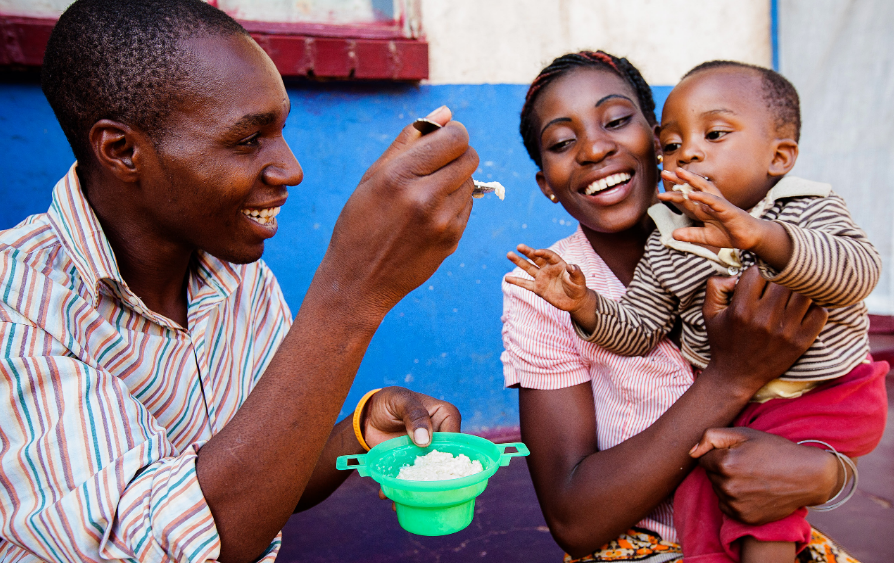
"For any behavior, be sure to tailor the steps to the local context and engage appropriate stakeholders along the way."
Caregivers must practice many behaviours together in the right balance over a 6- to 23-month period to achieve adequate complementary feeding for their children. How they carry out each behaviour is influenced by multiple factors across households, communities, and systems. Social and behaviour change (SBC) can navigate the complexities of feeding young children by going beyond communication to get at the root causes of behaviours (e.g., social norms). Published by the United States Agency for International Development (USAID) Advancing Nutrition, this workbook presents a stepwise process for designing, implementing, monitoring, and evaluating SBC through the lens of complementary feeding. Programme planners or practitioners can apply the concepts underlying this process, such as monitoring, evaluation, and learning (MEL), to other nutrition behaviours.
The workbook offers a SBC approach to creating participant-centred programmes that involves: (i) focusing and analysing key behaviours; (ii) using those behaviours to design and manage programmes, activities, and strategies; and (iii) tracking and adapting progress on behavioural outcomes. The modules cover these steps:
- Prioritise complementary feeding behaviours: This first step involves reviewing data to pinpoint which behaviours, if achieved, would have the largest impact on nutrition outcomes. "Be as specific as possible..."
- Plan and conduct formative research: The interplay between the individuals, the family, and the food environment means that there are many possible ways to achieve positive outcomes. Formative research can help you understand the context, including barriers and enablers, for complementary feeding programming - and reveals local solutions.
- Design an SBC strategy to improve complementary feeding: The SBC strategy draws intentional pathways between the priority behaviours and strategic activities, which include but are not limited to communication (e.g., policy strengthening, food access, infrastructure improvement, and skills building). "Given the complexity of complementary feeding, it is useful to begin strategy development by analyzing each priority behavior using a behavior profile..."
- Prepare the implementation and MEL plans: Activity plans, such as a communication plan, are a key piece of the broader, detailed implementation plan. For each priority behaviour, the communication plan specifies: the communication objectives; messaging content; and channels, media, and materials to reach each type of participant group or audience. A MEL plan lists the outputs, outcomes, and impact of a programme plan and guides monitoring efforts.
- Implement, monitor, and adapt activities to improve complementary feeding: This section stresses the need to continually strengthen staff capacity through quality improvement, retraining, and ongoing coaching. Implementation should be monitored every 3 or 6 months through rapid surveys, review of programme records, or qualitative feedback, according to the MEL plan.
- Evaluate activities to improve complementary feeding: Here, one asks questions such as the following: To what extent have the prioritised complementary feeding behaviours been adopted? To what extent have the identified intermediate outcomes (regarding the factors that influence each priority behaviour) been achieved? What is the level of exposure to programme elements, including participation in events and receipt of materials associated with each complementary feeding behaviour? How has this affected adoption of behaviours?
Each of the 6 modules begins with an overview, a note about what needs to be done to prepare for the module before beginning, the steps in the module, and the expected output. At the end of each module is a checklist. The user is advised to complete the workbook and all the worksheets in the order provided.
Publishers
107
USAID Advancing Nutrition website, September 29 2022. Image credit: John Healy/The Manoff Group
- Log in to post comments