










































Efforts to eradicate polio virus in Pakistan and Afghanistan
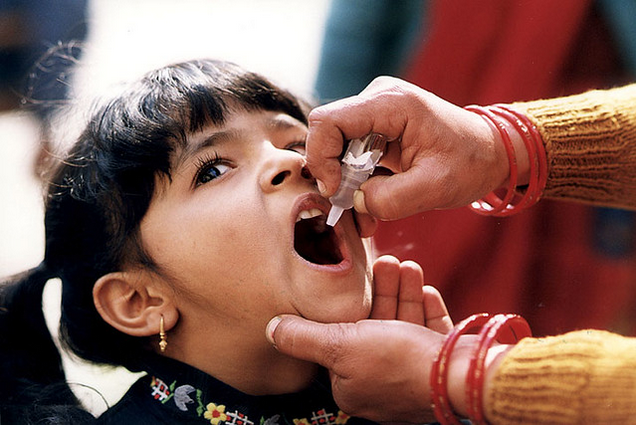
Author: Ashfaq Yusufzai, November 13 2019 - Pakistan and Afghanistan are the two remaining countries in the world where polio virus is endemic. But beset by conflict and terrorism in the past two decades, officials are struggling to wipe out the virus amid WHO [World Health Organization]'s recommendations to immunise all children under 5 years.
In 2019, Pakistan has recorded 80 cases so far, up from 12 cases in 2018, with Afghanistan recording 20 cases this year and 21 cases last year. 90% of these children didn't receive the oral polio vaccine, Arshad Chandio, head of the Pakistani Government's vaccination programme, told The Lancet Child & Adolescent Health. Pakistan has vaccinated 40 million children but missed 600 000.
Both countries face similar issues. According to Chandio, about 600 000 children in Afghanistan are not vaccinated against polio because their parents refuse the oral vaccine, arguing that these are not allowed in Islam. "Around 30% of refusals are [based on] religious grounds, while the remaining 70% are for other reasons", said Qibla Ayaz, Chairman of Pakistan's Council of Islamic Ideology.
Some believe that the vaccines are harmful because they are imported from India, while some do not trust the government, questioning its decision to provide oral polio vaccines- not only free of charge but also at their doorsteps - but not free treatment for chronic diseases such as hepatitis and cancer. Others believe that the vaccines are designed by western countries to render recipients infertile and therefore reduce the Muslim population. In particular, refusals rose when physician Shakil Afridi was jailed for helping the US [United States] Central Intelligence Agency to hunt down Osama bin Laden by running a fake hepatitis vaccine programme in Pakistan in 2011. After this incident, there was mistrust even among health workers, and militants had banned vaccination in two districts near the Afghan border, causing a severe outbreak in 2012. However, because of the heavy administrative burden during campaigns, staff does not have the capacity to address refusals. "We are trying our best to involve religious scholars to address refusals", said Chandio. On Oct 15, Pakistan's Council of Islamic Ideology validated 100 edicts issued by Islamic scholars in support of polio vaccination.
Regions controlled by the Taliban, particularly the Pashtun-dominated areas on both sides of the border, are not accessible to vaccinators. Since 2012, 72 people, including doctors and vaccinators, have been killed in these areas, said Gohar Rehman, President of the Pakistan Pediatric Association. Salima Bibi, a community health worker, said that some people view vaccinators with suspicion. "Three years ago, I survived an attack by militants near the border. We knocked at a door but two militants fired at us, killed my colleague instantly but I ran for shelter", she recalled.
Palitha Gunarathna Mahipala, WHO Representative in Pakistan, said the reasons that children continue to be missed during door-to-door vaccination campaigns are complex and include operational gaps, massive population movements across the 2700 km border with Afghanistan and within the country, as well as relatively small but impactful pockets of refusals. "In addition to this, the spread of misinformation and propaganda, fuelled by social media, has resulted in a mistrust in the polio vaccine, which has now materialised as real community resistance to vaccination." There is also increasing community fatigue, where communities that are deprived of many basic services such as essential health care, nutrition, clean water supply, and sanitation grow weary of repeated knocks at the door for polio-related activities.
Zafar Mirza, Pakistan's State Minister of Health, said the government is "planning to improve general health services in area where most cases have been detected". Rehman agreed that the door-to-door campaigns should be gradually replaced by a strengthened childhood immunisation programme.
Babar bin Atta, former Focal Person on Polio Eradication of the Pakistani Prime Minister, said that the government has started to adopt a "one-team approach", on the recommendation of the WHO's Technical Advisory Board. Although WHO and UNICEF [United Nations Children's Fund] currently work with the government, their staff is under separate administrative controls, making it difficult to hold them accountable. The new approach will see "all stakeholders work as a team regardless of their organisational differences, under the single command of the government", he said. Police security has also been tightened to protect vaccinators.
A great deal of cooperation and coordination is needed to ensure that children on the move are reached by vaccination teams, particularly at border crossings, said Mahipala. In Afghanistan, an extended subnational campaign was launched in September, 2019, using a combination of door-to-door visits and health facility-based campaigns, said the Afghan health minister Ferozuddin Feroz. A joint strategy has been agreed. "Our main priorities are that both countries start the campaign on the same day and deploy the same strategy to end refusals", Mirza added. The health ministers meet every month to discuss the issues and solutions. "There is a hope that we would be able to eradicate the disease from Pakistan and Afghanistan within next 3 years and eliminate polio in the world", said Mirza.
Click here for the original blog post as published in The Lancet Child & Adolescent Health DOI: https://doi.org/10.1016/S2352-4642(19)30382-7.. Image credit: Copyright © 2020 CDC Global/Flickr
As with all of the blogs posted on our website, the content above does not imply the endorsement of The CI or its Partners and is from the perspective of the writer alone. We do not check facts and strive to retain the writer's voice, as is detailed in our Editorial Policy.
- Log in to post comments