










































Dr Ann-Marie Wilson, 28 Too Many - DFID Girl Summit 2014
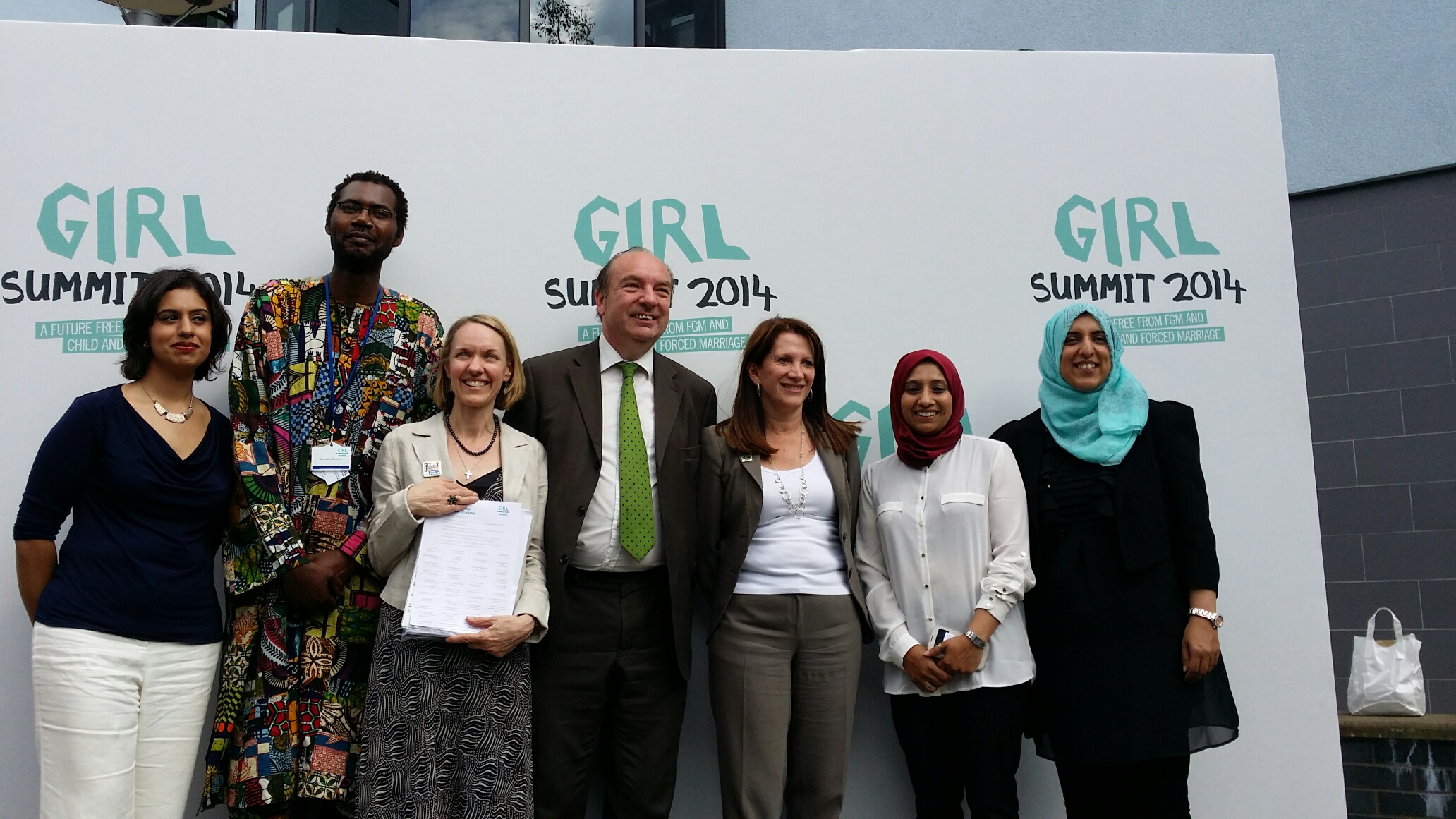
"We need to stop hiding behind religion, tradition and culture ...we need to attain and keep the positive attributes while leaving the negative attributes that can be eliminated.." - Dr Ann-Marie Wilson
Panel Discussion: Spotlight on Progress A3 - Faith Forward: the Role of Faith Communities and Leaders in Addressing FGM and CEFM
Context
This is one of the 14 "Spotlights on Progress" video-recorded sessions that took place at the Girl Summit 2014 in London on 22nd July. The sessions were organised to spark conversations and share best practice between practitioners from around the world, between grassroots activists and ministers, and across all the issues of female genital mutilation (FGM) and child, early, and forced marriage (CEFM). Girl Summit is a project of the Department for International Development (DFID), UK.
A featured panelist of this Spotlight session was Dr Ann-Marie Wilson, Founder and Executive Director, 28 Too Many who gave an overview of the role of inter-faith dialogue in working to end FGM in the UK and internationally.
Profile of Speaker
Dr Ann-Marie Wilson is Founder and Executive Director of 28 Too Many, a charity addressing FGM. She is a qualified Psychologist and training consultant.
Project strategy and key points made in the presentation:
28 Too Many provides research and advocacy resources to community-based organisations working to end FGM in the 28 African countries where it is practiced and the diaspora. In the UK, the charity organisation advocates to government for action to address FGM, and works closely with other charities and organisations in the violence against women sector.
Dr Ann-Marie Wilson starts off by giving some background to FGM in the context of faith-based work. She stresses that no holy book has any script that advocates for FGM or CEFM. It is also not a social requirement although people believe it is, especially women who are not literate. She makes the point that we need to stop hiding behind religion, tradition, and culture and rather just keep the positive attributes of culture while eliminating the beliefs and practices that are harmful.
Looking at what has been achieved so far, she talks about how the global community of faith leaders are coming together to work for change and to support survivors. Faith communities are continuing to innovate, and she mentions examples that were presented by her follow panelists, who are using teacher training to address FGM in Uganda; a multi-actor approach in Malawi; a community-based approach, including working with boys and men, in the UK; and collaboration between the medical profession and religious leaders in Egypt. She also mentions some of the initiatives 28 Too Many has been involved in, such as their work with Tearfund in Tanzania, which has led to 25 bishops and 75 community elders committing to a three-year programme towards abandonment.
Looking at what has been learned, Dr Ann-Marie Wilson states that faith leaders have influence on an international, national, and local level and can shape policy and direct interventions. Religious leaders can partner with local communities, and, as 80% of Africans attend some form of faith building weekly, this provides great opportunities for making a difference such as by: teaching in prayer and worship, empowering girls and women by supporting girls' education, supporting survivors with their ongoing health needs, and working with men and boys.
She makes the point that interfaith work and collaborative work is important as it brings people together and enables inclusive work to change attitudes and behaviours. Inter-faith dialogue and coalition building with wider non-faith groups can help outline areas for future action including joint statements, campaigns, and connections between local and international faith communities. For example, 28 Too Many has been actively involved in a new declaration, which has been signed by over 350 faith leaders and community activists, who have spoken out against forced marriage and FGM, making clear that FGM is not a religious requirement and that no faith supports the practice. This was presented to Government Ministers at the Summit and it is hoped that the declaration will support initiatives across all faiths and help galvanise further action against FGM in faith communities.
Click here to download the Faith Leaders Declaration Form.
She ends off with the hope that the energy and catalytic movement that has started with the Girl Summit can be harnessed for a change globally. Based on current progress and commitment, she foresees the end of FGM in the not-too-distant future.
Overview of the "Faith Forward: the Role of Faith Communities and Leaders in Addressing FGM and CEFM" Summit Session:
"This Spotlight discusses initiatives with faith and community leaders who support efforts to end FGM and child, early and forced marriage. Lessons are shared from inter-faith dialogue and from coalition building with wider non-faith groups to outline areas for future action including joint statements, campaigns and by connecting local and international faith communities. The discussion covers:
- building coalitions with faith and community leaders at the grass roots;
- working with faith and community leaders in challenging contexts;
- using traditional networks and new media to engage audiences;
- engaging a global community of faith leaders."
The speakers, in order of appearance, are:
Rebecca Mahlunge Programme Manager, Hivos
Shahin Ashraf Muslim Chaplain and National Network Coordinator for the Muslim Women’s Network UK
Reverend Dr Medad Birungi Zinomuhangi President and Founder, World Shine Ministries
Professor Gamal Serour Professor and Director of the International Islamic Center for Population Studies and Research at Al-Azhar University
Dr Ann-Marie Wilson Executive Director, 28 Too Many
The session was chaired by human rights journalist Saroja Coelho, formerly Environment Editor and Radio Presenter at Deutsche Welle.
Footage of this (available below) and other "Spotlight Sessions" are available on DFID’s YouTube channel.
- Log in to post comments