










































Data-Driven Strategy - Word of Mouth: Learning from Polio Communication and Community Engagement Initiatives
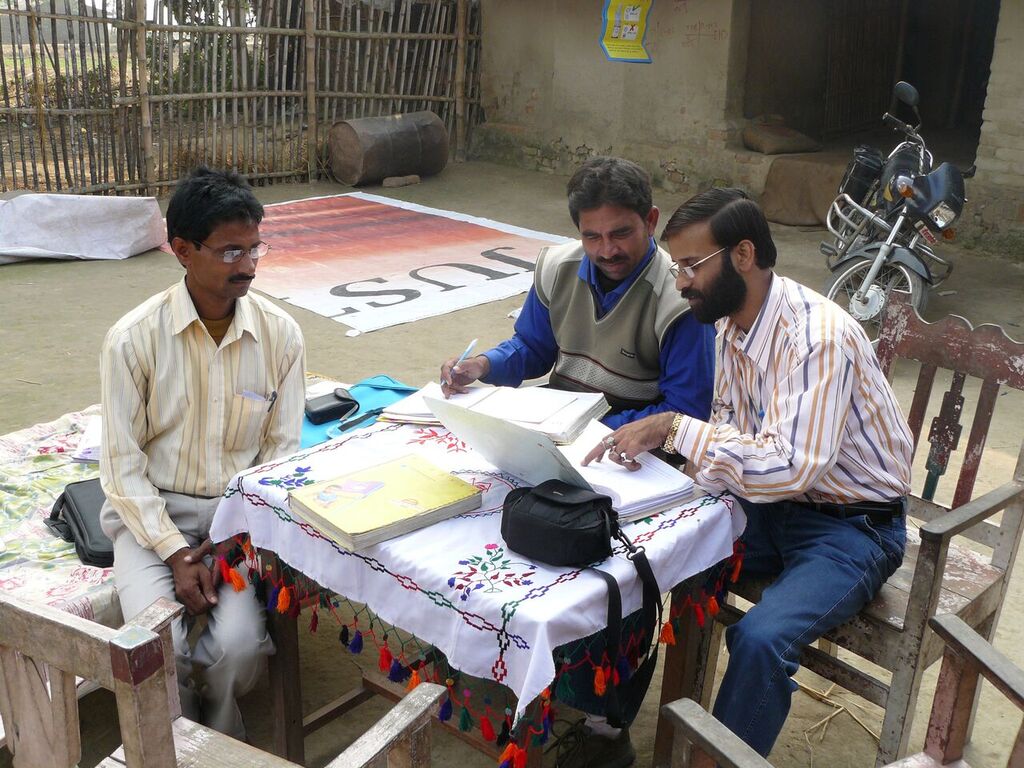
Data-Driven Strategy
Numerical data can be an uneasy bedfellow for social processes such as communication and community engagement. Yet such data have been essential for effective communication and community engagement action as part of the overall polio eradication strategy.
Core, Common Indicators
In 2011, a 12-month plan was implemented to agree on an indicator set for polio communication and community engagement. The main polio communication and community engagement partners debated and agreed on a limited set of core indicators19 that were applicable to all contexts and directly related to the problems being addressed, such as missed children. Impact, outcome, process, and input indicators were also established. These overarching indicators20 allowed for and supported comparisons over time, among different parts of a country and among countries, and have been very important and helpful in external, independent reviews (as outlined in Operational Oversight, below).
Real-Time Use
Almost daily, indicators and data related to those indicators are used in real-time21 for micro- and macro-decision-making about program actions. It is crucial that data collected in relation to the indicators are shared with frontline workers and key community members for their review, use, comment, critique, and feedback to national and district decision-makers—including those with budgetary responsibilities. The core communication indicators have been adapted and incorporated into the program coordination mechanism.
Nontraditional Approaches
Social, communication, and community-engagement strategies, actions, and impact can be difficult to capture. To do so may require the use of non-traditional communication indicators for communication purposes. Lot Quality Assurance Sampling (LQAS) is a random sampling methodology that is increasingly used for rapid data insights. LQAS was adopted across the program for localized surveys on perception and decision-making to get at the coverage realities that knowledge, attitude, and practice (KAP) surveys captured poorly. Today in Pakistan, Nigeria, and Afghanistan, every polio campaign is followed by LQAS surveys and fingermark surveys to assess campaign coverage at the local level. Data collected through these surveys should not only relate to the specific issue in question—in this case, polio—but should also support a clear understanding of relevant, overall demographic status and social trends. These detailed data can then be applied to strategy and program decisions.
Missed Children
The issue of missed children* had a significant effect on polio eradication and provides a clear example of these data-related principles in action. In the polio-endemic countries and outbreak responses, it became increasingly clear that the polio program needed to identify and track individual children. Such close monitoring can yield actionable information, such as these data from communication research:
“Across the sample, having missed children in past SIAs [supplementary immunization activities] was strongly correlated with propensity to refuse OPV vaccination in the future (urban: OR 4.63, p = 0.000, CI, 2.52–8.47; semi-urban: OR 3.1, p = 0.009, CI 1.32–7.26; rural: OR4.65, p = 0.000, CI 3.06–7.19).”22
Real-time monitoring of missed children, the reasons for missed children, and the reasons for absence and refusals, along with tracking of conversion of refusals are vitally important. To develop effective communication strategies, polio staff need to know: who these children are, where they are, and what specific qualities they may share. For example, many may belong to mobile families, such as those of kiln workers in India; or they may live in the same area, such as the 107 residential blocks in northern India.23 A data-driven strategy can assist in identifying and tracking individual children, reducing the number of missed children.
Program Incorporation
Rapid linking of the data with the strategy to improve performance is essential in the polio environment. Communication-relevant data such as tally sheets, finger-marking, and monitoring data are processed quickly and fed back to the program during the campaign for daily adjustments to the communication and engagement strategy. Such data also support quality assessment and micro-adjustments at very local levels, including the:
- Themes of evening meetings during campaigns;
- Nature of the micro-planning sessions, training content, and communication themes with influencers; and
- Ways in which political/government leaders are engaged.
Such effective collection and rapid use of key data for decision-making evolved over several years in response to the need for better targeting and understanding of local populations.
Data collected on a set of agreed-upon, core communication indicators, in real time and through methodologies that focus on at least one or two essential issues in the polio context (e.g., missed children), were all incorporated into day-to-day, strategic decision-making. This activity accelerated the vaccination of more children.
* Definition: Chronically Missed Children (CMC): A district or equivalent area where ≥10% children have been missed during the last three consecutive polio Supplementary Immunization Activities (SIAs); OR A cluster of children (≥50 children 5 years) who are being missed from polio vaccination in at least three consecutive polio SIAs due to any reason (roughly estimated, 50 children will be living among at least 300-500 population or an area for a vaccination team for a day.); OR a district or equivalent area reported an acute flaccid paralysis (AFP) case with zero-dose of polio vaccine (RI+SIA, OPV+IPV, or combination but excluding birth dose); OR a district or equivalent area having routine OPV3/3rd dose of polio containing vaccine (OPV or IPV or combination) coverage below 80% for two consecutive years (JRF). From: Standard Operating Procedures (SOPs): Identifying and Vaccinating Chronically Missed Children - Global Polio Eradication Initiative, 2015.
Editor's note: Above is an excerpt from the July 2018 paper "Word of Mouth: Learning from Polio Communication and Community Engagement Initiatives - Insights and Ideas to Accelerate Action on Other Development Issues", from the United States Agency for International Development (USAID)-supported Maternal and Child Survival Program (MCSP).
- Click here to return to the Table of Contents.
- Click here to go directly to the References page, where endnote information corresponding to the superscript numerals in the text above can be accessed.
Previous section - Community-Based Surveillance
Next section - Operational Oversight
Access the various parts of the document directly:
- Background
- Social Mobilization
- Norms and Culture
- Community-Based Surveillance
- Data-Driven Strategy
- Operational Oversight
- Conclusion
- References
- Acknowledgments
This paper is made possible by the generous support of the American people through the United States Agency for International Development (USAID) under the terms of the Cooperative Agreement AID-OAA-A-14-00028. The contents are the responsibility of the Maternal and Child Survival Program and do not necessarily reflect the views of USAID or the United States Government.
The Maternal and Child Survival Program (MCSP) is a global USAID initiative to introduce and support high-impact health interventions in 25 priority countries to help prevent child and maternal deaths. MCSP supports programming in maternal, newborn, and child health, immunization, family planning and reproductive health, nutrition, health systems strengthening, water/sanitation/hygiene, malaria, prevention of mother-to-child transmission of HIV, and pediatric HIV care and treatment. MCSP will tackle these issues through approaches that also focus on household and community mobilization, gender integration, and digital health, among others.
Image credit: Chris Morry
- Log in to post comments