










































COVID-19: Digital and Remote Approaches in Eliminating Female Genital Mutilation and Child Marriage
"[I]t is important to recognize how the [COVID-19] pandemic and the restrictions imposed are affecting people's behaviours, including those related to harmful practices."
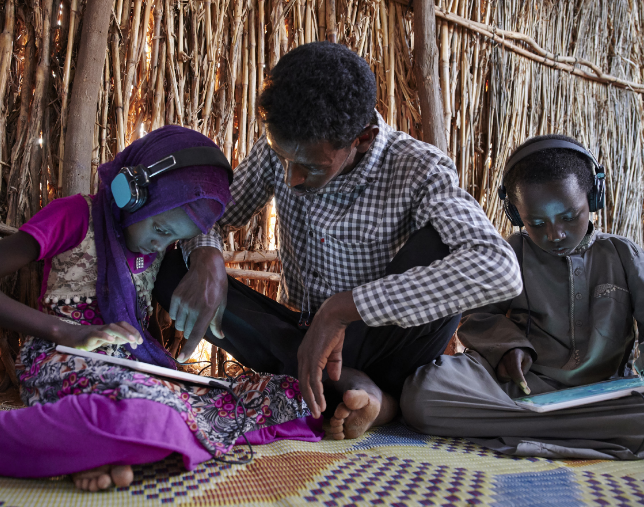
There is evidence that in parts of the world, child marriage is on the rise as families try to cope with financial burdens brought about by the COVID-19 pandemic, and female genital mutilation (FGM) practices may continue unchallenged in light of school closures and the disruption in protection systems. The physical distancing requirements imposed in countries around the world to try to prevent the spread of COVID-19 have mobilised the United Nations Children's Fund (UNICEF)'s to tailor its social and behaviour change (SBC) messages and strategies to the new situation, including by strengthening its use of mass media, social media, and mobile technology to reach and engage with intended audiences. Even where access to digital resources remains limited, UNICEF country programmes are combining new and more traditional communication methods to conduct their SBC work safely. This guidance note is designed to support these country programmes in conducting quality, evidence-based, meaningful, and measurable engagement for prevention of harmful practices programming, even when face-to-face communication is not possible.
Using tables, charts, lists, and text boxes to organise content and provide examples, the guidance note:
- Provides a list of remote mobile and digital engagement options and their functions, including the requirements for implementing them and their suitability for 2-way communication;
- Details strategies for gathering information about how the pandemic is affecting people's thoughts, beliefs, attitudes, feelings, motivation, and intention around FGM and child marriage (this information can be used for designing and refining behaviour and social norms programming incorporating digital approaches);
- Features 14 tips for conducting effective digital engagement activities during the pandemic (e.g., align your digital efforts with your programme's theory of change - links to behavioural theories are provided in the reference section);
- Outlines complementary channels to enhance the reach of digital approaches, with approaches, tips and considerations, and examples across the various levels of the socio-ecological model (SEM);
- Reviews areas for monitoring and evaluation (M&E) of digital activities, noting that offline measurement is still important;
- Pointing readers to relevant risk communication and community engagement (RCCE) resources and summarising and linking to their content, with a focus on considerations for FGM and child marriage programming; and
- Offering tables that provide breakdowns and descriptions of each RCCE indicator pertaining to digital and traditional media in the context of harmful practices programming, intended to promote consistency in global-, regional-, and country-level reporting:
- Reach: the number of people reached through one-way channels of communication;
- Engagement: the number of people involved in participatory actions; and
- Feedback: the number of people sharing their concerns and asking questions/clarifications for available support services to address their needs through established feedback mechanisms.
Publishers
24
UNICEF Humanitarian Practice website, November 24 2020. Image credit: © UNICEF/UNI232355/NOORANI
- Log in to post comments