










































Conflict Resolution and Peer Mediation Toolkit
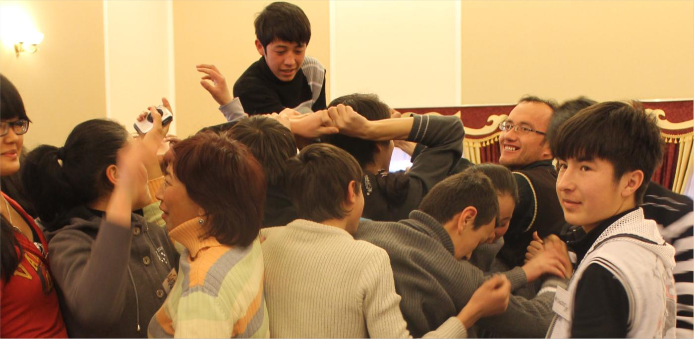
This toolkit provides the training notes, handouts, sample agendas, and resource templates to initiate a peer mediation programme for youth. Such programmes are based on "a model of education that empowers individuals to prevent, resolve, and transform violent and nonviolent conflict by developing the values, attitudes, skills and knowledge to envision alternative options for action towards building peace." IREX and partner organisation Foundation for Tolerance International (FTI) created the toolkit to support the creation of peer mediation programmes at schools in Kyrgyzstan as part of the Youth Leadership for Peace Project funded by the United States Institute of Peace (USIP).
Section One of the toolkit provides introductory materials, including a smaple 14-week training plan and a sample intensive training plan. Section Two: Understanding and Analyzing Conflict includes, among other things, exercises and handouts. Section Three focuses on becoming a peer mediator, exploring topics such as communication inhibitors and active listening and including tools such as a sample script, checklist for good resolution, and mediation role plays. Section Four includes materials for starting a peer mediation programme, followed by a list of references.
As noted here, beginning a peer mediation programme in a school or community-serving organisation requires the commitment of a core group of youth and adults who are motivated to learn peer mediation methodology and to serve as neutral and confidential mediators. Each individual mediation consists of 6 distinct stages: Agree to Mediate, Storytelling and Gathering Points of View, Focus on Interests and Needs, Create Win-Win Solutions, Evaluate Options, and Create an Agreement. Youth should be actively involved in the planning and implementation of the programme, guided by a supportive adult or group of adults and provided with a physical space and encouragement to use the mediation services.
Designed for an audience of youth ages 13-18, activities in the toolkit can be adapted for a younger or older audience. Before carrying out any of the trainings, trainers are encouraged to design a training plan for preparing new mediators. Two sample training plans are included here. Prior to each training, it is suggested that trainers prepare the necessary supplies and handouts according to the training notes and consider how each training can be best adapted to meet the needs of the training participants. Because discussion of conflict can elicit strong emotions, trainers should be prepared to provide emotional support to participants and to direct participants to school and community resources for additional psychological support.
After receiving training on conflict prevention, peer mediation, and how to use the toolkit, teachers and youth from the Batken and Chui regions of Kyrgyzstan initiated peer mediation programmes at 16 schools. From January 2013 to June 2013, peer mediators held more than 60 mediations, with 90% of mediations resulting in a signed mediation agreement.
Publishers
101
IREX website, July 7 2016.
- Log in to post comments