











































Compilation of Briefing Papers on the Media Sector Development in Ethiopia
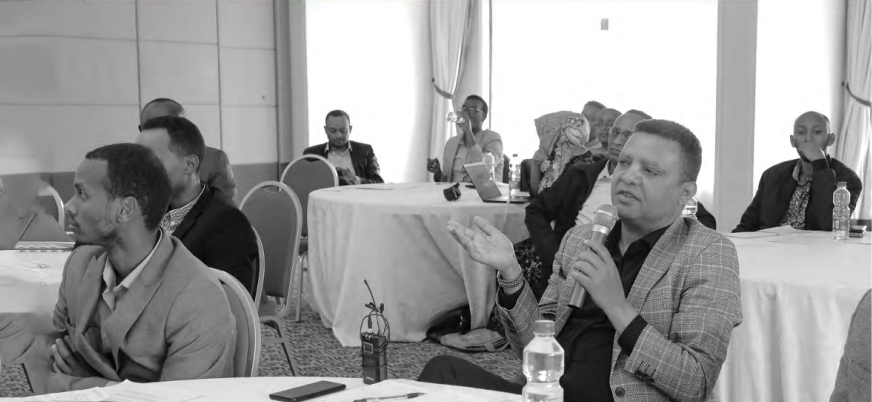
Addis Ababa University (Zeral, Shiferaw); independent researcher and consultant (Tadesse); Maseno University (Mwangi); International Media Support (Negash)
"The learnings documented in this edition show that international media development organisations must aim to improve their programme design and support, considering internal and external factors that influence the media ecosystem in Ethiopia."
This compilation of briefing papers discusses the findings of various studies on the state of the media in Ethiopia and the achievements and lessons learned from the Protecting Independent Media for Effective Development (PRIMED) programme. It looks in particular at the media reform process in Ethiopia, coalition-building as a strategy to strengthen the media and ensure media freedom, the safety of journalists in a conflict-affected setting, and the role of conflict-sensitive journalism in Ethiopia.
The compilation has been produced by the PRIMED programme, a consortium-led media development programme being implemented in Bangladesh, Sierra Leone, and Ethiopia to support the provision of public interest media (see Related Summaries below for more information). The set of briefing papers, produced by International Media Support (IMS), one of the consortium members working in Ethiopia, is designed to provide insights into the PRIMED programme approach to media development and identify areas for improvement for future media development interventions in Ethiopia. According to IMS, the compilation is intended for media sector stakeholders who are particularly interested in supporting media development efforts in Ethiopia.
The briefing papers contained in this compilation are as follows:
Reflections on Lessons Learned and Future Media Development Intervention Priorities in Ethiopia - by David Lush and Elsabet Samuel Tadesse
This first paper provides an overview of the briefing papers in the compilation, highlighting some of the achievements of supporting coalition-building efforts to advance the safety of journalists, conflict-sensitive journalism, and the active engagement of stakeholders in the ongoing media reform process. It also draws from them a number of key lessons learned, as well as recommendations for future media development interventions (see list of recommendations below).
The State of Media Regulatory Reform in Ethiopia - by Abdissa Zerai
This briefing paper is based on the findings of a rapid assessment commissioned by IMS that examined the media regulatory reform process, its achievements, challenges, and the measures different actors have taken to overcome the challenges. The assessment explored the role of the media and civil society organisations in advancing the media regulatory reform endeavours and what is needed to strengthen media civil society organisations' networks and coalitions in promoting the media reform process. This paper discusses how the reform endeavour is faring, followed by ways forward in designing appropriate intervention mechanisms to make the reform a success story.
The Safety and Security of Journalists in Ethiopia - by Tewodros Negash Bayu
This briefing paper seeks to enhance awareness about the safety of journalists, promote dialogue and coordination, and contribute to the realisation of an enabling environment vital to the support of good journalism and the enjoyment of freedom of expression in Ethiopia. It mainly relies on the findings of an IMS-commissioned independent study published in April 2022 to assess the safety of journalists in Ethiopia. Informed by the United Nations Educational, Scientific and Cultural Organization (UNESCO)'s indicators and the IMS approaches to the safety of journalists, this paper starts by briefly discussing the state of the safety of journalists in Ethiopia, as well as the root causes of attacks and threats they face, and then it proceeds to explore the potential roles of key state and non-state actors to propose mitigation measures and recommended actions.
Conflict Sensitive Journalism in Ethiopia: Experiences and Learnings - by Teshager Shiferaw
This briefing paper presents findings from studies funded by the PRIMED programme to discuss why conflict-sensitive journalism is important in facilitating conflict reduction and the peace process and informing future interventions in promoting conflict-sensitive journalism in Ethiopia. The paper based its analysis on a rapid assessment of conflict-sensitive journalism and the findings of a study on media coalition-building efforts. Additional insights were extracted from coalition-building dialogue forums and training workshops supported by PRIMED and other programmes implemented by IMS.
Media Coalition Building Process and Progress: Analysing the PRIMED Programme's Support to Media Coalitions in Ethiopia - by Elsabet Samuel Tadesse
This briefing paper draws on the findings of a study to assess factors influencing the emergence and sustainability of coalitions, and the contribution of coalitions to the media ecosystem. It seeks to provide insights into the coalition-building strategies that worked well in Ethiopia, as well as tactics that did not seem to work so well. The paper further highlights coalition-building objectives, structures, leadership, and the role of international media development organisations in the dynamic local context.
Lessons on Media and Civil Society Coalitions in Media Reforms: Case of Sub-Saharan and Southern Africa - by Haron Mwangi
This briefing paper specifically discusses lessons learned from the various studies and experiences on how factors such as structure and architecture of coalitions, operating and intervention models and strategies, funding, solidarity of coalition members, and the sociopolitical context in which they operate interact and play themselves out to determine their success in causing change - in particular, the expansion of media and civic spaces, including freedom of the media and of expression, human rights, and the safety and security of journalists.
While each of the papers outlines strategies for the way forward related to its particular theme, the following suggestions for local and international media actors are highlighted in the introductory chapter of this publication:
- Develop a culture of defending human rights and democracy. Being a human rights defender is one of the mechanisms that helps mobilise grassroots support, acceptance in a broader collaboration, and transnational cooperation with like-minded partners who protect freedom of expression and media independence.
- Promote active participation and collaboration within coalitions and strategic alliances with key actors in the sector, including government organisations, to encourage local ownership over interventions and the effectiveness of policy advocacy. Incorporating the issue of minorities, women, and community radio journalists' needs and interests into project designs can ensure media independence and rights issues are embedded and inspire sector actors' cooperation.
- Collaborate with civil society organisations from the onset in freedom of expression and media independence advocacy initiatives. The lessons documented in this edition show that cooperation with civil society organisations enables effective and sustainable coalitions that promote media reform and the safety of journalists.
- Diversify sources of funding. Local media actors need to consider raising funds domestically from public and private entities, as well as individuals, through various fundraising schemes, along with diversifying international donors. For media and journalists' associations, collecting membership fees should be a priority.
For international media partners to support an enabling environment for free and independent media, the focus should be on the following:
- Engage early and maintain support and momentum of media development interventions by designing a comprehensive and continuous intervention involving local stakeholders and considering the political dynamics during programme planning and implementation.
- Ensure the sustainability and scalability of successful media development projects by strengthening the institutional capacity of local partners (e.g., providing need-based technical support and financial resources).
- Foster active and inclusive engagement with local media actors, including community radio, online media, and regional journalists' associations, to facilitate sector-wide engagement as an integral part of media development interventions.
- Sustain a strong and viable national multi-stakeholder forum in coordination with local and international actors to ensure that existing media development initiatives are supported and monitored and that learnings are documented at the national level. One strategy is to strengthen the Ethiopian Media Sector Alliance to prioritise the needs of Ethiopian media, coordinate interventions based on the needs and interests of local media actors, and encourage international media organisations to provide support based on their expertise and objectives.
IMS website on September 18 2023. Image credit: IMS
- Log in to post comments