











































Caught in the COVID-19 Storm: Women's, Children's and Adolescents' Health in the Context of UHC and the SDGs
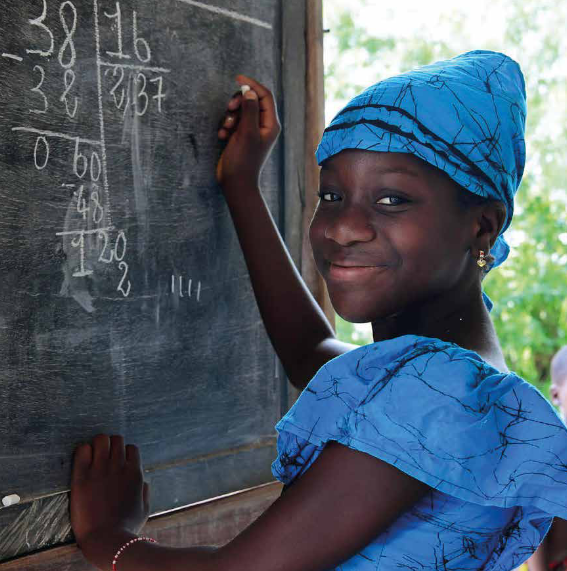
"To engage the public - and to make accountability for women's, children's and adolescents' health more valid and valuable - people's voice, their lived experiences, needs and priorities need to be included at every opportunity. However, voice does not equate to accountability if there is no one to listen, act and respond."
From the United Nations Secretary-General's Independent Accountability Panel (IAP) for Every Woman Every Child (EWEC), this report reviews the status of key EWEC indicators towards the 2030 Sustainable Development Goals (SDGs) and the implications of COVID 19 on women's, children's, and adolescents' health and rights. It presents: country scorecards, analyses of critical challenges and factors for success, and highlights from country case studies. In addition, it sets out an accountability framework with 4 pillars and offers 3 recommendations as to how countries and other stakeholders can strengthen accountability to accelerate progress, with an eye to 2030.
The IAP's focus on accountability as a means for realising health and rights is linked to the group's embrace of the September 2019 United Nations High-level Meeting Declaration on universal health coverage (UHC). The IAP emphasises the importance of "accountable and transparent institutions to ensure social justice, rule of law, good governance and ending corruption". Reinforcing this message, UHC2030 calls for political leadership including and beyond health as a social contract to ensure healthy lives and well-being for all at all stages. Per IAP: "Accountability relies on public support and engagement, which in turn relies on open and transparent information and sound institutions. To enable accountability, political leadership needs to be clear but open to criticism. Decisive political leadership and strong public engagement can be the difference between an optimal response and a suboptimal one."
As the opening sections of the document make clear, even before COVID-19, global progress towards 2030 targets to save the lives of women and children was already lagging by around 20%. (See Box 1 on pages 19-22 for the 16 EWEC key indicators of women's, children's, and adolescents' health - in the categories of "survive", "thrive", and "transform" - and COVID-19 implications, as well as the Annex for additional details). With regard to UHC, only between one-third and one-half of the world's population were covered by essential health services, including interventions for women, children, and adolescents. Mistrust in governments, the private sector, the media, and non-governmental organisations (NGOs) was rising globally along with concern about inequities.
Then, the pandemic arrived on the scene - with significant effects on the lives and health of pregnant women, children, and adolescents. For example, there have been closures of both static and mobile reproductive health clinics, scale-down of sexual and reproductive health services, the halting of immunisation campaigns, an increase in hunger and mental health issues due to school closures, the risk of online abuse and exploitation associated with reliance on technology for learning and social interaction, a spike in domestic violence, and limits to the availability of life-saving services for pregnant women and newborns as health workers are diverted from maternity to COVID-19 units. And an estimated 40-60 million people could be pushed into extreme poverty, with women and children disproportionately affected.
As Chapter 2 outlines, pre-COVID-19, some countries in the same income category were performing better than others on women's, children's, and adolescents' health and rights and ensuring UHC. This lesson emerged from a process through which the IAP developed and analysed country "scorecards" by income category and key indicators for EWEC and related SDGs. According to the IAP, these discrepancies can be explained by factors such as these:
- Women, children, and adolescents are far more likely to die in countries affected by fragility and conflict situations than in other countries.
- The health of women, children, and adolescents is put at risk when countries have limited capacity to gather and analyse health and population data, such as for births and deaths.
- Women, children. and adolescents are disproportionately affected by inequities between and within countries, such as low coverage of essential health services, health worker shortages, and racial injustice.
- Wasted health expenditure severely constrains the resources available for women's, children's, and adolescents' health, and it undermines trust globally.
"Countries that perform better on reducing maternal and child mortality are also performing better on a range of evidence-based factors for success, such as data and information, and laws and policies. They invest in a justifiable way, based on evidence, rights and rule of law, and use innovation to catalyze progress. This suggests that how health spending is used is as important as how much is spent."
To put these issues into concrete terms, the IAP conducted 5 country accountability case studies that amplify country experiences and the voices of women, children, and adolescents. They focus on:
- Ethiopia - on community scorecards to strengthen quality of care. Among the recommended actions: "The community discussion is the most important part of the process and requires good management and leadership by the client councils."
- Georgia - on public-private partnerships for UHC. Among the recommended actions: "[Expand] partnerships with the media to ensure more regular coverage of UHC topics and to raise awareness about the health and rights of women, children and adolescents."
- Guatemala - on barriers to accessible, affordable, and culturally acceptable care. Among the recommended actions: "It is very important to have spaces for dialogue to help review the health system in a cultural context. It must also focus on rights, respect, and collaboration."
- Kenya - on medical detentions. Among the recommended actions: "[P]articipants suggested developing a strategy to communicate health care costs and payment mechanisms, as well as the waiver scheme to citizens, health workers and other relevant stakeholders; and working together with civil society, the media, government and others to raise awareness about right to health and health literacy."
- Papua New Guinea - on complex challenges and women's, children's, and adolescents' health and rights. Among the recommended actions: "Communities could be organized from the bottom up so that the community voice becomes much more powerful."
In order to reverse the downward turn and accelerate progress towards the 2030 targets, the IAP sets out an accountability framework (based on the evolution of the EWEC accountability framework as outlined in the Annex). Accountability has 4 pillars, all of which must be present:
- Commit: All those who have commitments and a responsibility to act should be clear on their roles and obligations towards achieving agreed goals and realising rights.
- Justify: Decisions and actions related to commitments must be supported and explained on the basis of evidence, rights, and the rule of law.
- Implement: core accountability functions of monitor, review, remedy, and act should be institutionalised and implemented in a constructive way to facilitate learning and progress.
- Progress: Continuous progress towards agreed goals and rights should be ensured, justifying any reversals.

The following recommendations indicate how countries and other stakeholders can use the IAP framework to revitalise accountability and achieve targets:
- Invest in country data systems, such as birth and death registration that ensures every woman, child, and adolescent counts and is counted. This entails securing high-level political commitment and sufficient investment and improving data quality and communication to enable decision-making. Private sector and civil society organisations (CSOs) should drive innovation and create demand for information and evidence that reflects lived experiences. Media and public-interest organisations should support data collection and evidence-gathering, translating it into information that is easily understood and encourage public debate based on the findings.
- Institutionalise accountability functions and features for all policies, programmes, and processes related to women's, children’s and adolescents’ health that incorporate institutionalised monitoring and review, and lead to remedy and action based on concrete recommendations. Actions taken should be verified and processes themselves should be regularly audited.
- Create accountability processes that enable all people's experience to be considered valuable and valued in the context of delivering credible accountability processes. For example, sustained criticism during the COVID-19 pandemic over the lack of testing services has compelled decision-makers to take action. Parliaments should hold governments to account for enabling voice and participation in accountability, and equally, the governments' responsiveness to it. The media, CSOs, and social networks should convey the range of people's lived experiences in their work, creating meaningful spaces for the articulation of community, regional, and national voices.
In conclusion: "As the COVID-19 response progresses - and countries assess the impact and implications for women's, children's and adolescents' health - the IAP's recommendations and its model of independent review offer a template for accountability across health and the SDGs. Building a strong culture of accountability will give all countries a real chance to get through COVID-19, achieve the SDGs, and realize the rights of every woman, child and adolescent."
Editor's note: The report was launched at a High-level Political Forum (HLPF) side event that was co-hosted by the Governments of Japan, South Africa, and Georgia on July 13 2020. (Watch a video of the launch, below.) Its aims were to:
- Bring visibility to the importance of health accountability as a practical tool to ensure countries deliver on the promise of UHC for women, children, adolescents. and those furthest left behind, especially as COVID-19 threatens to disrupt progress and reverse the gains;
- Energise and inspire stakeholders to act on the IAP recommendations to strengthen social-political accountability, especially at the country-level, and make health accountability everyone's business; and
- Set the scene and build momentum toward follow-up planned throughout the year.
Launch of the #IAP2020 Report page on the EWEC website, November 5 2020. Image credit: ©UNICEF/UNI326822/Frank Dejongh
- Log in to post comments