











































Behavioural Drivers of Child Feeding during and after Illness in the Democratic Republic of the Congo: Results from a Qualitative Study through the Lens of Behavioral Science
ideas42 (Zimmerman, Kau, Tovohasimbavaka); Johns Hopkins Center for Communication Programs (Ngandu, Kangudie, Van Lith, Rajan, Naugle); JSI Research and Training Institute (Sherburne)
"...suggests opportunities for programs and services to support caregivers and health workers to improve child feeding during illness and recovery by addressing the underlying behavioral and contextual drivers of their choices."
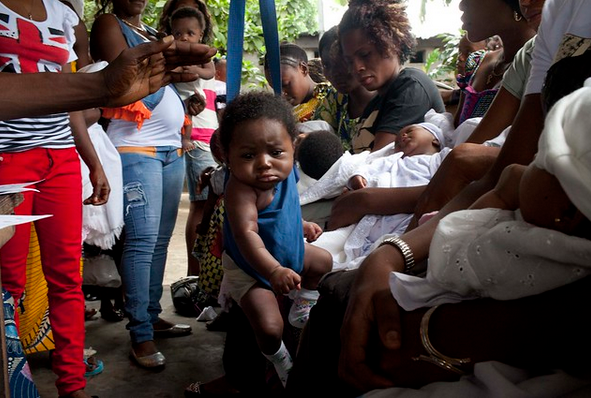
Despite global guidance, in the South Kivu province of the Democratic Republic of the Congo (DRC), half the mothers interviewed in one qualitative study described breastfeeding their young child less than usual during illness. Such gaps in complementary feeding exist within a broader context of poverty, food insecurity, and malnutrition in the DRC. This article describes research conducted in South Kivu, DRC, to illuminate the drivers of caregivers' feeding choices and behaviors during and after illness. The research was conducted as part of a behavioural design process to develop social and behaviour change (SBC) solutions to improve nutrition outcomes for infants and young children in the DRC.
Field research was conducted in April and May 2021 in health facilities providing primary care services and in communities in 4 Aires de Santé (health areas) within the health zones of Katana and Mubumbano, South Kivu. Research participants included caregivers of children aged 6-23 months, other family members, community health workers (CHWs), and other community members. Data from in-depth interviews and observations of sick and well-child consultations were analysed for themes.
Five key findings about behavioural drivers emerged:
- Poverty and scarcity impose practical constraints and a cognitive and emotional burden on caregivers.
- Health providers are distracted and discouraged from counseling on feeding during sick visits, in part because they do not believe caregivers can put their advice into practice due to their limited resources.
- A focus on quality and hesitations about quantity obscures the benefits of feeding greater amounts of available foods. Caregivers also believed that increasing the quantity of food too rapidly as the child recovers can be harmful.
- Perceptions of inappropriate foods limit caregivers' choices. While caregivers and other community members did not consistently describe the same foods as harmful, nearly all of the foods most commonly available in South Kivu (e.g., beans and vegetables) were described by some respondents as bad for young children.
- Deference to a child's limited appetite leads to missed opportunities to encourage them to eat. Caregivers did not mention small, frequent portions of food as a strategy to encourage a child to eat more when appetite is limited. When prompted, some actively objected to this tactic.
Thus, this research demonstrates how poverty and food insecurity weigh particularly heavily on caregivers in South Kivu when they consider how they can care for their sick and recovering children. Selected programmatic implications include:
- Programmes and services can respond to conditions of scarcity by working with caregivers to expand their options for increasing feeding within the constraints they face - for example, by identifying and elevating the locally available, affordable, and nutritious foods that the family already eats and that can be fed to a young child.
- Programmes may have value not only in preparing families to meet their practical needs but also in easing the cognitive and emotional burden that can negatively impact decision making. For example, they could redirect caregivers' attention away from what they cannot do and towards what is within their control. They can do the same for providers, by orienting them toward nutrition counseling that caregivers can regularly put into practice, rather than towards specific foods that may be inaccessible or unaffordable.
This research was followed by collaborative design activities to develop solutions that address each of the key findings described above. These solutions aim to support families to set achievable goals for feeding during and after illness, consider additional affordable and nutritious local foods, build skills and confidence to overcome limited appetite, and celebrate each bite the sick and recovering child takes. The solutions include counseling aids and reminders for healthcare providers, a facilitated peer exchange on tactics to encourage young children to eat when appetite is limited, and card-based activities facilitated by a CHW during visits to families of sick children.
The researchers suggest that, in other settings where features of the environment are similar, the insights and programming implications from this DRC study are likely to translate. In conclusion: "By addressing...behavioral and contextual drivers of health workers' and caregivers' choices, services and programs have potential to generate meaningful impact on child health and nutrition outcomes, even in highly resource constrained settings."
Public Health Nutrition 2023 Dec 27:1-24. doi: 10.1017/S136898002300294X. Image credit: © Dominic Chavez/World Bank via Flickr (CC BY-NC-ND 2.0 Deed)
- Log in to post comments