










































Anti-Corruption Week 2007: Corruption in the Health Sector
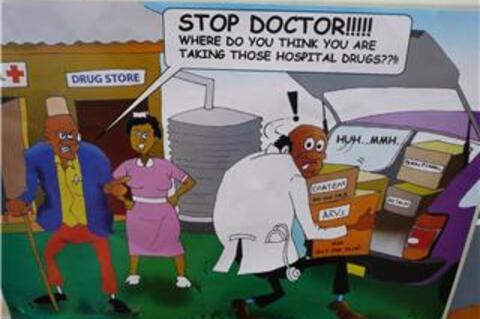
The campaign focused on the related issues of low availability of medicines, leakage of medicines, and poor management. According to organisers, studies have shown a low availability of medicines in public health facilities, as well as large quantities of medicines intended for public facilities being leaked into the private market where they can fetch a higher price. The organisation also noted that poor governance and corruption stem from poor management, and lead to problems going unnoticed or unreported.
The campaign therefore sought to introduce a way of increasing the accountability of health providers to the consumers and the communities that they are supposed to serve. According to ACCU, consumers generally lack the organisation and power to discipline other actors by voicing criticism or choosing a different health care provider. This campaign therefore sought to strengthen social accountability understood as an “approach towards building accountability that relies on civic engagement where ordinary citizens and civil society organisations participate directly or indirectly in exacting accountability. It is a broad range of actions and mechanisms that citizens, communities and CSOs and independent media can use to hold public officials and servants accountable."
The 2007 Anti-Corruption Week was therefore designed to increase people's awareness of the existing problems and their health rights, and to inform people about what channels are available for complaints and for seeking redress. Most of all, the activities were aimed at three concrete outputs: expose concrete cases of corruption in the distribution of medicines, form community groups for future monitoring, and ensure concrete commitments from local leaders. During the campaign, names and contacts of individuals, who were keen to volunteer to monitor local service delivery in the health sector, were collected. The volunteers, who became part of a community group, are then responsible for holding local leaders accountable. They are tasked with ensuring that an increased number of corruption cases related to medicines are indeed investigated by authorities and not ignored or left unresolved as has been the case. To create awareness and establish commitment and support, the campaign engaged in a broad range of activities which included public processions, debates, community-based drama such as forum theatre, and print and broadcast media.
Health, Corruption, Governance
The organisation states that in 1999, medicine leakage rates were as high as 73%. In addition, inadequate monitoring and supervision, as well as a lack of corrective action, affect the management and the quality of health service delivery. The organisation therefore recommended increased community oversight in health service provision.
According to ACCU, already one week after the week-long campaign results were evident. On January 14 2008, the Daily Monitor reported that 3 health workers from Gulu referral hospital were arrested. They had stolen medicine for 72 million Uganda Shilling. Again 3 days later on January 17, the New Vision and Daily Monitor both ran a story about 10 doctors and nurses who were arrested in central Uganda.
Following the 2007 campaign, MS-Danish Association for International Cooperation secured further funds to ensure that the campaign was sustained throughout 2008. During 2008 ACCU and the regional coalitions worked hand in hand to address the corruption in the health sector. Key demands were identified and included the demand that government health workers should be barred from owning clinics or drug shops since it is a clear that government drugs end up in those shops, and that the government must brand all essential drugs with a "NOT FOR SALE" label.
MS-Danish Association for International Cooperation - Uganda and Anti-Corruption Coalition Uganda (ACCU)
MS-Uganda website on March 12 2009.
- Log in to post comments