










































Africa Routine Immunization System Essentials (ARISE)
Over a 3-year period, the Africa Routine Immunization System Essentials (ARISE) research project documented interventions that drive strong routine immunisation (RI) system performance and analysed their potential for diffusion, at scale, throughout sub-Saharan Africa. ARISE worked to translate these tested solutions into focused options for supporting RI at the global, regional, national, and sub-national levels. The hope is that this information will contribute to meeting the goals of the Decade of Vaccines and enhance the RI body of knowledge beyond the project's completion in November 2012. ARISE was supported by the Bill & Melinda Gates Foundation and managed by JSI Research & Training Institute, Inc.
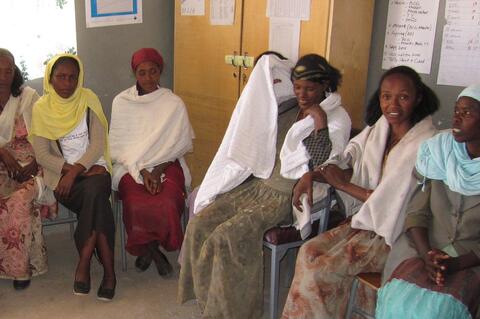
ARISE worked to build the evidence base on what drives improvements in RI, suggesting ways in which the assets already available within health systems and communities can be used to best advantage. ARISE first conducted a landscape analysis that proposed a set of preliminary drivers of strong RI system performance across Africa (e.g., adaptation of RI strategies to context). In total, 757 documents were identified for review. After screening for relevance, researchers extracted data from 150 documents. Researchers conducted 46 screening interviews with a range of key informants and 13 additional in-depth interviews in Ghana. ARISE then analysed these and other potential drivers in Ethiopia, Ghana, and Cameroon. In part, this process included focus group discussions (FGDs), such as one involving mothers in Ethiopia. In all, ARISE spoke with about 300 individuals in 12 districts within the three case study countries. The in-depth case studies that emerged: provided ARISE with drivers that are critical to performance; showed how they were designed and implemented; and described contextual factors affecting their uptake and the interrelationships among them. These studies also explored the country-level decision-making processes and how RI fits into broad health-sector priorities and planning.
In addition to the case studies, a range of technical resources are available on the ARISE legacy website. For example, these documents highlight communication elements that the ARISE research spotlighted:
- Notes From The Field 1: Health System and Community Partnerships [PDF] - "The ARISE studies found that community stakeholders were the critical, trusted link between the health system and the community. In broad terms, these stakeholders contributed in the following ways:
- Political and administrative leaders. They lent health workers credibility by joining them on household visits to encourage vaccination, inviting health workers to district council meetings, and in areas where health workers were not from the community, helped them integrate and settle in by urging communities to trust the health workers assigned to them.
- Traditional authorities, including community leaders (village and district chiefs) and leaders of religious establishments (churches, mosques, etc.). Community leaders demonstrated their commitment to RI by lobbying for more clinics and suitable accommodations for community-based health workers, thereby enabling the latter to live within the communities they served. Religious leaders supported health workers' efforts by educating their members about the importance of immunization, providing key information on dates and locations of immunization sessions, and encouraging their followers to seek vaccination services. Religious leaders emphasized health workers' importance to the community, thereby increasing the latter's credibility and facilitating health worker-community interactions.
- Volunteers and nongovernmental organizations (NGOs). Unpaid health workers (volunteers) selected from the local community and fluent in the local dialect were instrumental in mobilizing communities to attend immunization sessions and tracking defaulters. With their intimate knowledge of the community, they updated health workers about pregnancies and births, thereby enabling follow-up and vaccination. In some cases, volunteers helped transport vaccines from districts to sub-districts and health centers. Local and international NGOs [non-governmental organisations] played an important role in some districts....In Ethiopia, local NGOs created awareness about immunization and trained health extension workers and community health workers."
- Notes From the Field 2: Using Data to Make a Difference [PDF] - This document briefly describes one common driver of improvements in RI: the use of data by health workers to answer questions and address management issues with information readily available to them. "The combination of using data to track progress and non-threatening, learning-focused management techniques was found to be highly motivating for health workers and community members involved in RI service delivery." It provides examples of how this driver was made to function effectively in the different settings of the ARISE case studies.
- Notes From the Field 3: Community Centered Health Workers [PDF] - This document briefly describes another common driver of improvements in RI: health workers who actively and directly focus on community needs. "Community-centered health workers contributed to coverage improvement by providing services and information directly, building effective community partnerships, and ensuring continuity in the relationship between health workers and clients. The community-centered health workers, in turn, received ongoing support from their respective district health management teams..." It gives examples of how this driver was instrumental in improving coverage and how it operated in the different contexts studied in the ARISE case studies.
Immunisation and Vaccines.
According to ARISE, the Global Immunization Vision and Strategy, developed by the World Health Organization (WHO) and the United Nations Children's Fund (UNICEF), states that by 2010 or earlier, developing countries will reach at least 90% national vaccination coverage (of diphtheria-tetanus-pertussis, or DTP3) and at least 80% vaccination coverage in every district or equivalent administrative unit. "Although considerable progress has been made on achieving this goal over the last decade in African countries, it has not yet been met and there is real need to better understand how to achieve and sustain high vaccination coverage rates by reaching under-served children. With new, expensive vaccines being introduced into many countries, it is even more vital to learn from and document experience in the field."
JSI Research & Training Institute, Inc. with Bill & Melinda Gates Foundation funding.
Global Immunization News (GIN) [PDF], December 2012, and ARISE website, January 29 2013.
- Log in to post comments