










































Lean HCD: A Case Study in Human-Centered Design in the Highlands of Guatemala
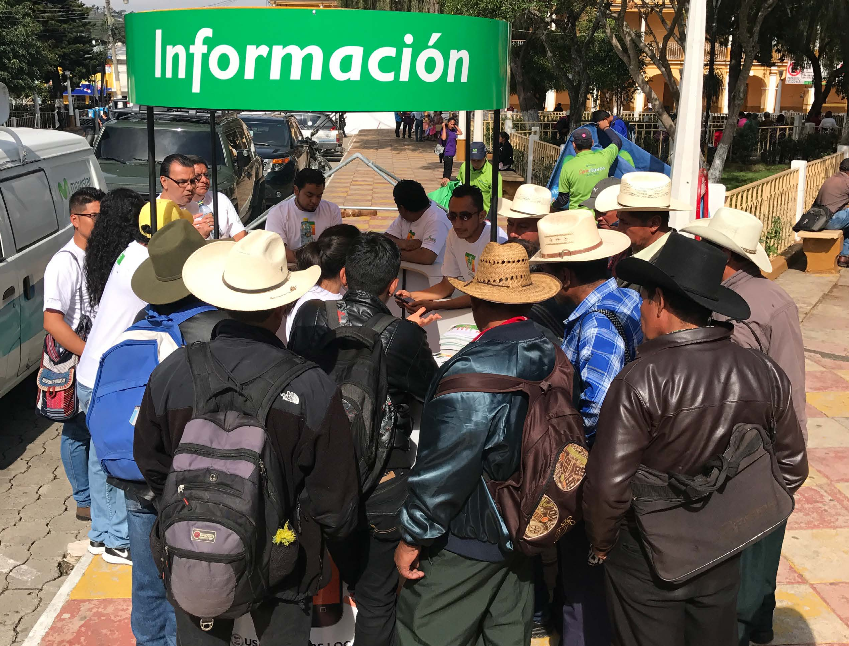
"HCD requires deeper engagement on the part of the design team than a traditional design process, which tends to start with the technology instead of with people's problems. This tech-centered approach may reduce uptake of the solution..."
"Lean HCD" is a term the international development company DAI uses to describe a flexible, locally-grounded approach to human-centred design (HCD). This paper describes lean HCD, which involves developing empathy with users to gain an understanding of the political, economic, and social factors that guide behaviour and decision-making, but with greater methodological flexibility than traditional HCD and with increased remote/long-distance collaboration with local experts, organisations, and institutions. This paper illustrates lean HCD though a case study of Nexos Locales, or "Nexos", a local governance initiative run by DAI with funding from the United States Agency for International Development (USAID).
Lean HCD focuses on:
- Balancing the resource restrictions of international development programming with best practices in empathy-based strategy and decision-making.
- Outsourcing key aspects of design research and product development to local firms and experts who are closer to users both physically and culturally.
- Recognising the growth in connectivity and smartphone adoption by using messaging apps (e.g., WhatsApp, Facebook Messenger, Skype) to stay close to local players and run remote trainings.
- Generating collaboration between local stakeholders throughout the iteration and development of the solution.
The paper explores how DAI applied lean HCD with the mayor and the municipality of Chiantla, Guatemala, exploring these questions:
- What did Lean HCD look like for Nexos Locales?
- Did DAI get to know the people of Chiantla?
- How did DAI gain insight into how they use technology?
- When did DAI understand their relationship with their municipality?
- Why did DAI choose the platform, form, and function of the solution?
- What did DAI build?
To begin, the paper provides the project background. In brief, launched in mid-2014, Nexos works in 29 municipalities in Quetzaltenango, training local officials in public financial management and transparency, helping civil society deepen its capacity to hold local governments accountable, and enabling municipalities to plan for natural disasters and deliver better services, such as safe drinking water. In December 2015, Nexos received a call from Carlos Alvarado Figueroa, mayor-elect of Chiantla, who asked for help to develop a smartphone app that makes the municipal budget transparent and encourages direct citizen feedback. Its goal was to understand the daily challenges faced by citizens of Chiantla, gather their perspectives on services they expect from local government, and bridge any gap. Somos Chiantla ("We are Chiantla") is an Android app that: publishes the municipal budget in an easy-to-understand format; offers a 311-style public service so citizens can report potholes, public lighting problems, and water outages; tracks municipal development projects; and provides contact information for key government services. Somos Chiantla is the result of a design process that engaged the public, civil society, Guatemalan tech companies, and local officials.
As detailed in the paper, the process involved:
- HCD Phase 1: Inspiration
- Cultural and political context
- Framing the design process
- Design process limitations
- Creating a project plan
- Consulting with the administration
- Rapid assessment
- Developing specs with stakeholders
- HCD Phase 2: Ideation
- Survey findings
- User testing
- HCD Phase 3: Implementation
- Finalisation
- Launch
- Next Steps
Recommendations include:
- Be prepared to sell the HCD process from the beginning, communicating the risks inherent in technology-centred approaches. DAI warns that starting with the technology (to build an app) rather than the objective (to enable citizens' civic engagement and transparently share budget information) often leads to poor design and hence wasted resources and poor uptake. User-centred approaches such as HCD mean greater investment during initial design but have the potential to deliver greater uptake and better results in the long run.
- Get users/beneficiaries used to the ambiguity that can come with an iterative process like HCD.
- Even when resources do not allow for a full HCD process in the field, consider lean HCD - which, as this case study shows, can be successful if implemented with as much rigour and local constituent engagement as possible.
- Create coalitions with local actors. Partners such as local leaders, community-based organisations, and local governments have "cultural cachet and networks of constituents that they can draw on to enrich the design process. Their help will be critical for promoting the tool once it is launched."
- Seek outside perspectives and criticism, especially from laypersons without a background in design or technology. Find people who know your population of interest well, understand your technical theme, or have done similar work elsewhere, and ask what they think.
- Allow enough time. "HCD is a complex, multiphase process, especially when practiced from a distance across cultural barriers and time zones. As data filter in, the full importance or meaning of certain information might only come into full view in the context of something learned later on....And remember: the 'launch' of the product is really just another beginning - gathering user feedback after the rollout will be crucial..."
- Trust yourself. "Outside of your design team, no one else has the context and understanding of the challenge at hand."
DAI hopes that this paper will be a useful guide for other development professionals who are tasked with designing information and communication technology (ICT) solutions for overseas development projects.
"Lean HCD: How to Do Human-Centered Design from Headquarters", by Adam Fivenson, ICTworks (originally published on Digital@DAI), January 3 2018. Image caption/credit: "Guatemalan men gather around an information kiosk on launch day in Chiantla". © DAI Global, LLC
- Log in to post comments