










































Information Note: Digital Health Technologies, Virtual Care and Community-Based Monitoring Solutions for TB Programmes
"Care must be taken to ensure that all people, but particularly those who are most vulnerable, receive access to TB and COVID-19 services and that no groups are left behind." - Stop TB Partnership
People who have tuberculosis (TB) are usually more vulnerable to other infections, including the novel coronavirus, due to pre-existing lung damage. The disruption in routine health services and the need for social distancing during the COVID-19 pandemic have led TB programmes to turn to alternative options, such as digital health technologies, to provide TB services. This resource provides lists of - and links to details about - available technologies for TB programmes to consider across the care model.
It begins by outlining information communication technology (ICT) considerations for TB programmes, including data storage solutions and country regulations, access to equipment, and funding. Digital technologies for different TB programme operations and services outlined are in these areas:
- Programme management - To continue to keep staff updated on best practices and new information, programmes should provide eLearning opportunities. Many of the platforms listed in the resource can be used to conduct webinars and host interactive trainings. Other platforms exist to build and host interactive, online self-study trainings.
- Case detection and diagnosis - Many mobile apps exist for case-finding, contact management, and notification. Some are available commercially, open-source, or locally developed (e.g., Wi-Fi TB [PDF]).
- Care and treatment of persons with TB - TB programmes may need to consider shifting facility-based care to home-based care options, using telemedicine and digital adherence technologies (DATs - click here for the KNCV Tuberculosis Foundation's DAT toolkit.
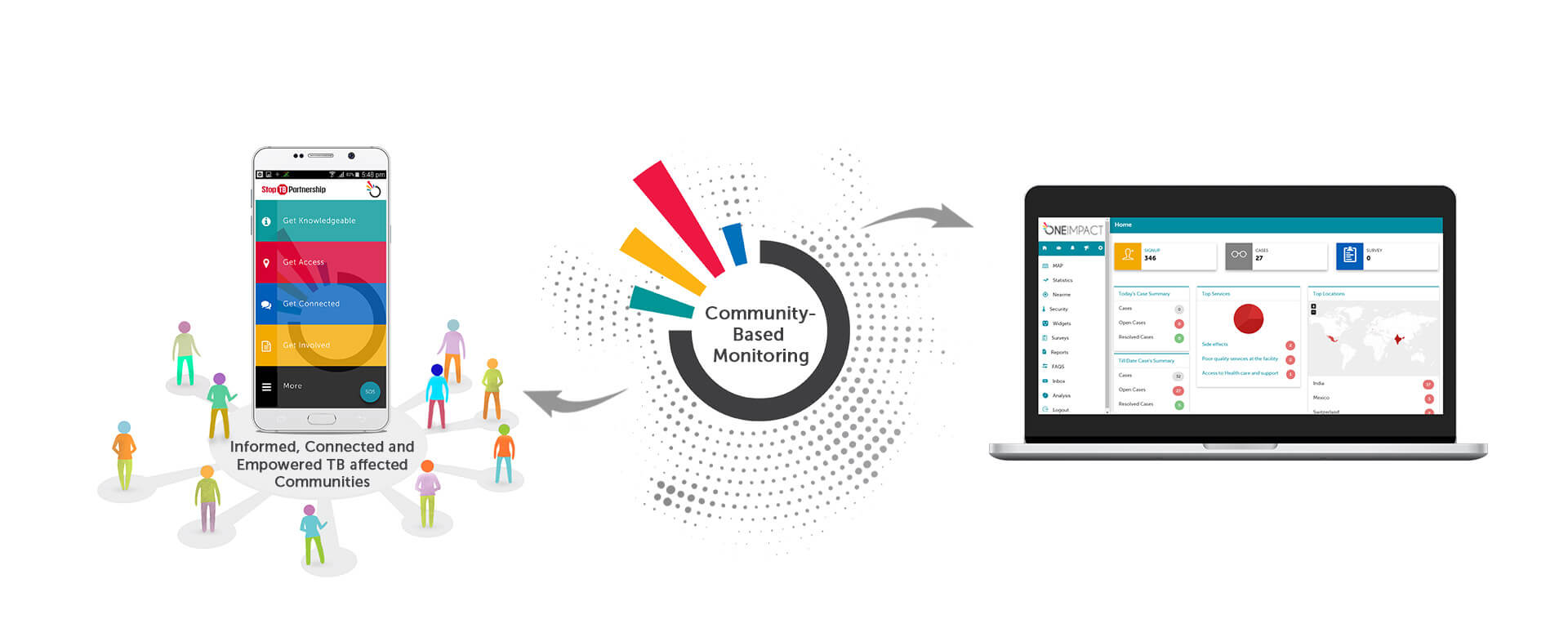
- Community-based monitoring of the TB response and other community engagement tools - Digital platforms such as the OneImpact tool can empower people and communities affected by TB with information on TB, with ways to connect with peers and services, and with the capacity to monitor the availability, accessibility, and quality of TB services. OneImpact generates information for community advocacy and for programmes to take action to meet the needs of people affected by TB. Also, widely available messaging and social media tools can be used to share messages and information with different community groups as needed.
6
STOP TB website, March 27 2020. Image credit: OneImpact
- Log in to post comments