










































Global Kids Online Tools for Researchers
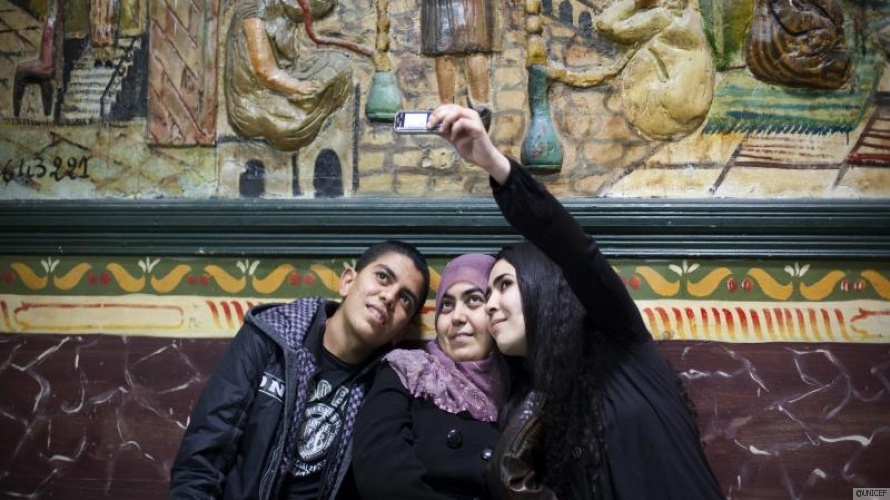
"Rather than thinking about children as objects to be studied, we might think of children as co-researchers who are involved in all phases of a research project, from defining the issues to be investigated and designing the methods that will be used to elicit children's perspectives, through to the analysis, interpretation and communication of the results." - Amanda Third, in the guide "Researching the Global Opportunities for Children Online"
This series of guidance resources on researching children's online risks and opportunities comes from Global Kids Online (GKO), an international research project that aims to generate and sustain a rigorous cross-national evidence base around children's use of the internet by creating a global network of researchers and experts. Created through a collaboration of the London School of Economics and Political Science (LSE), the United Nations Children's Fund (UNICEF) Office of Research-Innocenti, and the European Union (EU) Kids Online network, the GKO research model invites researchers and research users to adopt a child-centred approach that sees children as rights-holders and citizens, able to actively shape the online domain and able to exercise agency in the digital environment. Supported by the WeProtect Global Alliance (2015-2016), the project aims to connect evidence with the ongoing international dialogue regarding policy and practical solutions for children's well-being and rights in the digital age, especially in the global South.
In all countries participating in the GKO study, the researchers have been talking to children about their experiences of the internet. Research results are currently available from Argentina, Montenegro, Serbia, South Africa, and the Philippines. So far, it has been found that the voices of children are not represented well in key debates on children's digital rights, and there has been only sporadic attention to the views of young people. Research with children is thought to be crucial to overcoming this imbalance and helping to understanding better children's online experiences.
Some of the country partners have used creative participatory methods to allow young people to express more actively their views. UNICEF Montenegro organised a 4-day participatory workshop to train young people in making and editing digital film and acting as peer researchers and filmmakers in a way that would allow them to express their views, concerns, and creativity. That same organisation also worked with the University of Montenegro, Ipsos, and children from 3 secondary schools to facilitate youth-run focus groups on key issues related to their internet use. The participatory research was then presented at a Youth Forum on Cyberbullying as part of the #EndViolenceOnline campaign launched by Montenegro's Government and UNICEF aiming to promote digital safety and digital literacy among young people.
Gleaned from these and other experiences, the GKO project has developed a global research toolkit that is designed to enable academics, governments, civil society, and other actors to carry out reliable and standardised national research with children and their parents on the opportunities, risks, and protective factors of children's internet use. It consists of:
The qualitative toolkit, which includes research instruments to help a researcher to design, carry out, and analyse qualitative research on children's online risks and opportunities. These are designed in a way that allows covering the key topics identified by GKO, as well as remaining flexible and following up on issues that children raise.
The quantitative toolkit, which outlines the parameters of the modular survey and offers practical guidance on conducting the research. It also includes the materials needed for analysing the data and expert guidance on key issues to consider during the research process.
Written by experts in the field, the method guides give practical advice to researchers, with case studies and best practice examples. Also included are useful links and checklists. The guides, most of which include an accompanying video by the author(s), include:
- Research Framework for Online Risks and Opportunities, by Sonia Livingstone - sets out the research framework for GKO. It introduces the research context and aims, and situates these within relevant findings about children's online access, risks, and opportunities.
- Ethical Considerations for Research with Children, by Gabrielle Berman - designed as a basic toolkit and reference point to ensure that researchers participating in the GKO programme critically reflect on potential ethical issues and mitigation strategies, and uphold high ethical standards when undertaking the research.
- Survey Sampling and Administration, by Alexandre Barbosa, Marcelo Pitta, Fabio Senne, and Maria Eugênia Sózio - provides a methodological framework for the production of high-quality and reliable statistics to measure children's access to the internet and practical guidance for administering the GKO survey.
- Adopting and Adapting a Standardised Modular Survey, by Kjartan Ólafsson - discusses the adaptation of survey items for a new survey so that they are responsive to diverse circumstances while, where possible, still generating cross-nationally comparable findings.
- Conducting Qualitative and Quantitative Research with Children of Different Ages, by Lucinda Platt - maps the specific issues to consider when carrying out research with children in order to obtain accurate and meaningful information about their lives. It discusses how these issues evolve with the age of the child and the implications for the design of research instruments.
- Researching the Global Opportunities for Children Online, by Amanda Third - situates current research on online benefits and opportunities in relation to key trends in global research on digital practice and identifies the key issues that shape children's capacity to maximise the positive impacts of their online engagement.
- The Challenges of Researching Online Child Sexual Exploitation and Abuse, by Ethel Quayle - examines the methodological challenges faced during research into online child exploitation and abuse and explores some of the best practice examples of how researchers have responded to these issues.
- Participatory Methods: Engaging Children's Voices and Experiences in Research, by Dorothea Kleine, Gemma Pearson, and Sammia Poveda - lays out the case for participatory research with children, as well as explaining key research design principles and methods.
- Global and Regional Comparative Analysis of Children's Internet Use, by Uwe Hasebrink - identifies the key challenges when doing global and regional comparative analysis of children's internet use. It discusses how best to determine similarity and difference in relation to measurement and comparisons, both in statistical and social terms.
- Global Research on Children's Online Experiences: Addressing Diversities and Inequalities, by Shakuntala Banaji - examines the connections between knowledge production, power, inequality and exclusion in the production of international research about children and new or emerging media.
- From Research Findings to Policy-Making: Children's Rights in a Digital Age, by Kerry Albright, Jasmina Byrne, and Daniel Kardefelt-Winther - examines the relationship between research and policy in the area of children's rights in the digital age, and supports researchers to frame their objectives and findings in ways that support policy development.
Guidance for adapting the tools to allow for cross-national comparison of data is also available. Finally, GKO is developing an impact toolkit, which is designed to provide guidance and ideas relevant to all stages of the research life-cycle and help researchers plan and optimise the uptake, use, and impact of their activities and outputs. The impact toolkit will be launched in the autumn of 2017; click here to find it then.
Publishers
"Engaging Children's Voices and Experiences in Research", by Mariya Stoilova; and project description page on the Global Kids Online website - both accessed on July 21 2017. Image credit: UNICEF Office of Research-Innocenti
- Log in to post comments